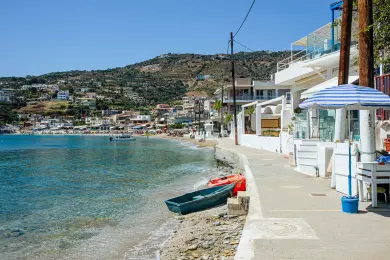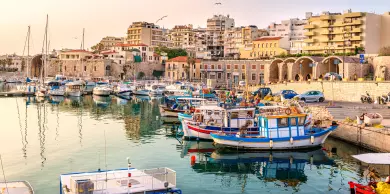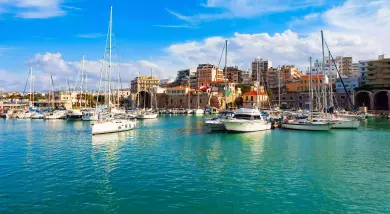
Heraklion is the largest city and administrative capital of the Greek island of Crete. Found on the shores of the Sea of Crete, Heraklion is also one of the oldest inhabited places in the world, with evidence of human settlement as far back as 7,000 BCE. Heraklion is also known for its role in Ancient Greek mythology, and it is easy to see why this place captured the imaginations of so many writers in the ancient world. In fact, the city of Heraklion is named after the Greek hero and father of the Olympic games, Heracles, who we know better as (thanks to Roman interpretations of Greek mythology) Hercules.
From ancient palaces to tombs and lots more, here are the 7 best mythological sites in Heraklion.
Step Into Legend: 7 Incredible Mythological Sites in Heraklion
1. Palace of Knossos
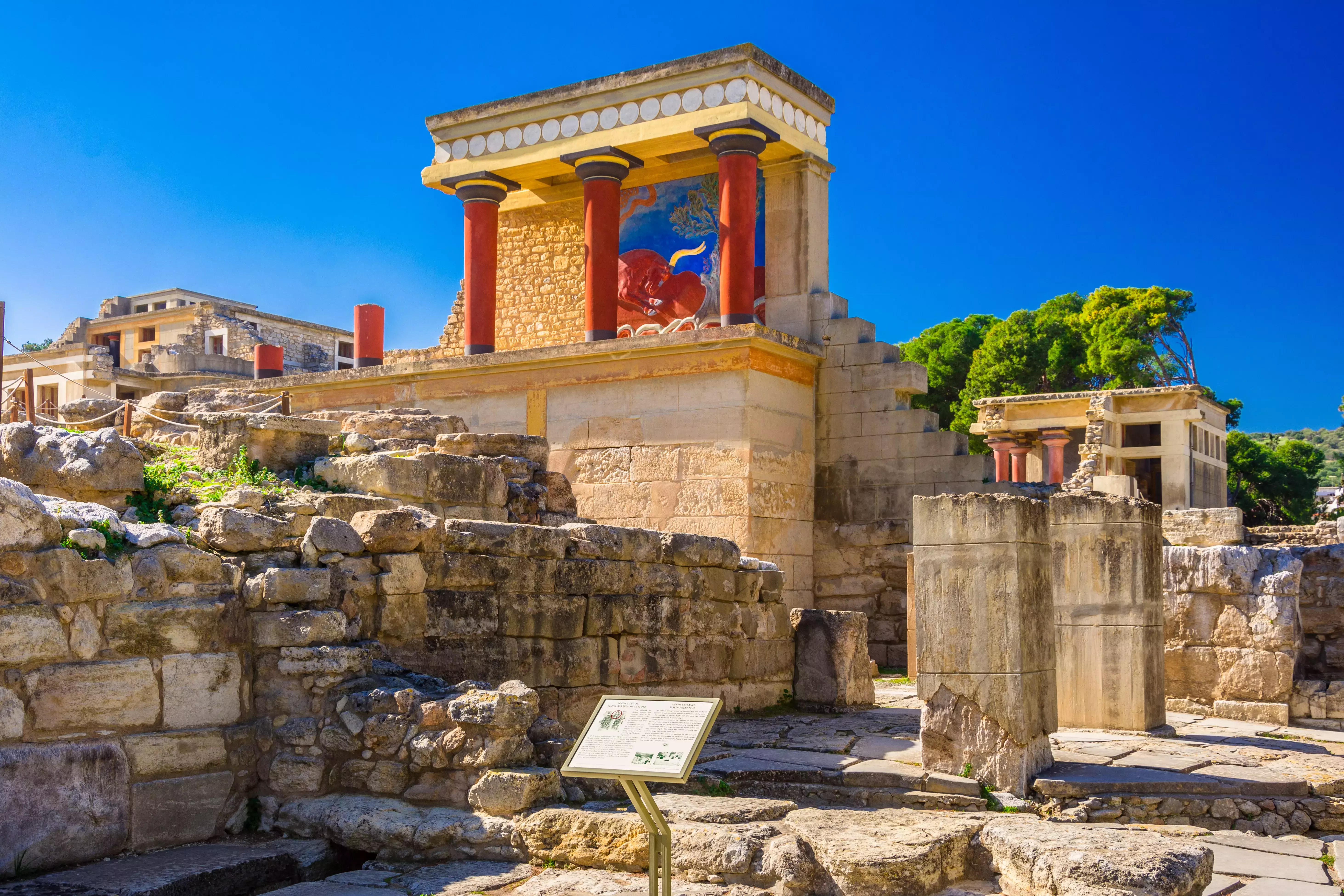
Few sites can rival the Palace of Knossos, also known as the Knossos Palace, in Heraklion when it comes to some of the best mythological sites in the whole of Greece.
A centre of Minoan civilisation, the Palace of Knossos is arguably the most important centre for the understanding of Minoan civilisation on earth. However, aside from its genuine historical links, it also has some important mythological connections.
The Palace of Knossos was said to be home to the myth of Theseus and the Minotaur, a half-man, half-bull hybrid. Theseus was said to have discovered a labyrinth underneath the palace where the minotaur was kept hidden.
While the labyrinth has not been discovered (yet!), there are lots more to see at the Palace of Knossos related to the myth, and who knows – it might have certain elements of truth to it. Go and check it out for yourself and come to your own conclusions about whether there really is or isn’t a labyrinth underneath the palace.
2. Cave of Zeus (Dikteon Cave)
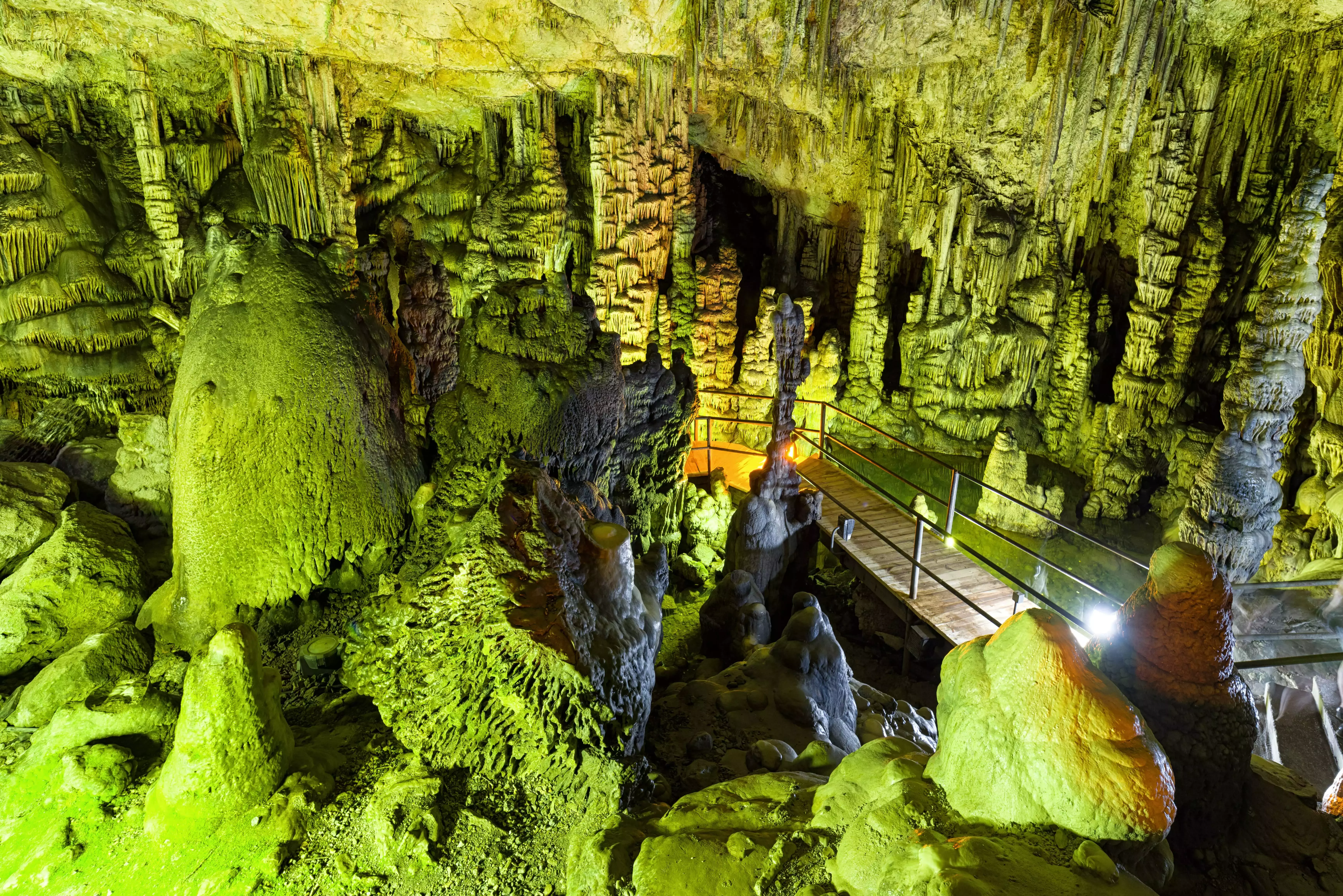
Not far from the outskirts of Heraklion is the so-called Cave of Zeus, also known as Dikteon Cave. This is alleged to be the birthplace of the Greek god Zeus, and throughout the cave’s huge five chambers, you can follow the story of Zeus’ life, from his birth to his death.
Enthusiastic tour guides tell this story in an interactive and enjoyable way, or you can simply enjoy the peace and quiet of the caves yourself if you prefer.
It was said in Greek mythology that Zeus was hidden from his father Cronus deep in the cave, as Cronus was known to eat his offspring to stop them from challenging his position of power.
Enormous stalagmites and stalactites give the cave a mythical feeling, and you can feel yourself transported back in time thousands of years to Ancient Greece the deeper you go.
3. Amnisos
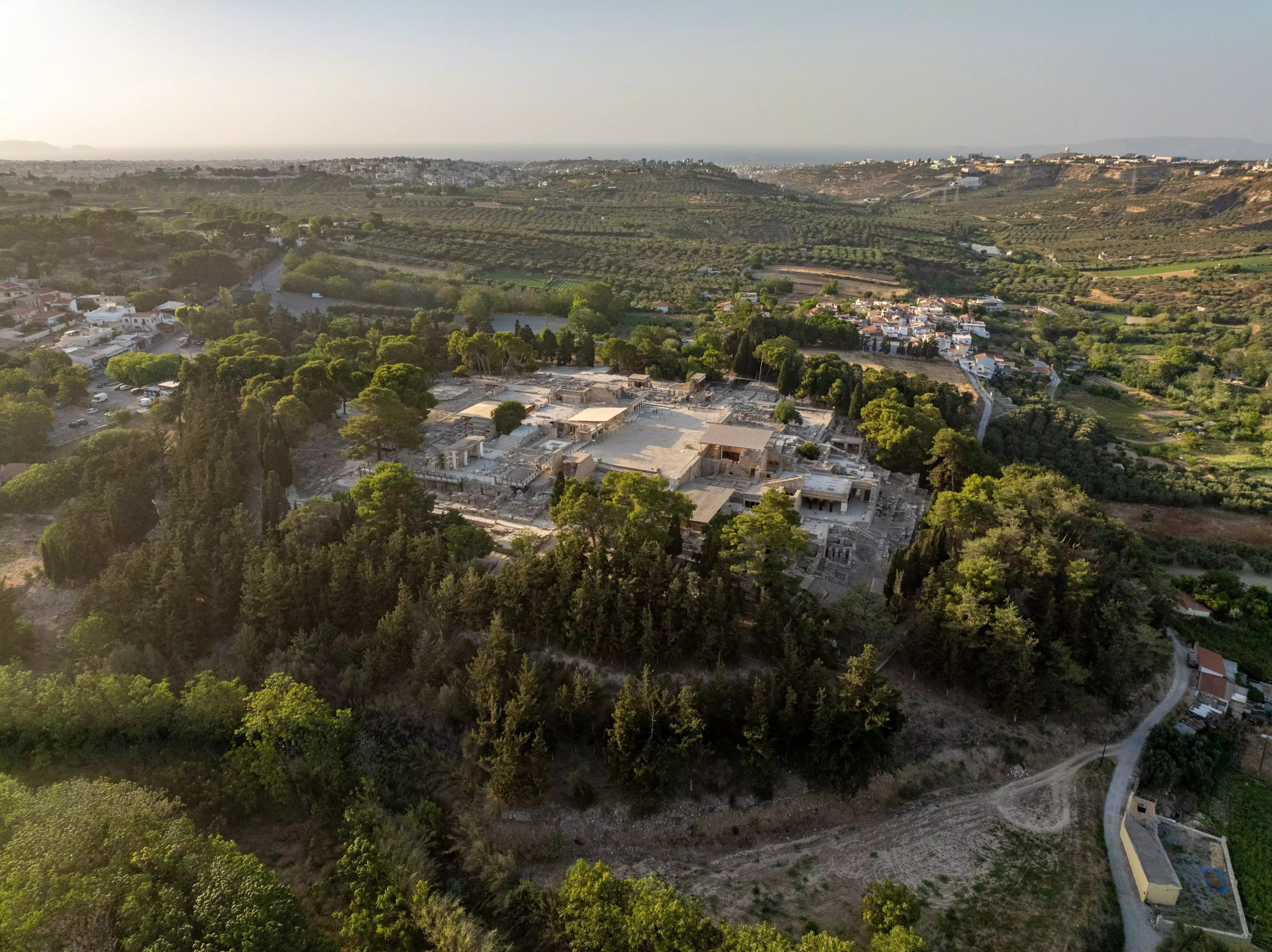
Another archaeological site turned mythological centre in Heraklion is Amnisos. It was once a major trading port to the city of Knossos, but had appeared in Greek mythology long before it was established as a port city.
A key part of the Minoan civilisation, it was alleged in Ancient Greek mythology that the heroes Daedalus and Icarus lived at the Villa at Amnisos, and they fled from here to escape the wrath of King Minos.
The two men, who were father and son, escaped from Amnisos by attaching wings to their backs. They had made these wings from feathers held together by wax. Icarus, the son, famously flew too close to the sun which melted the wax in his wings, causing him to fall to his death.
An interesting place to explore and learn more about one of the most famous Greek myths.
4. Cave of Eleithyia
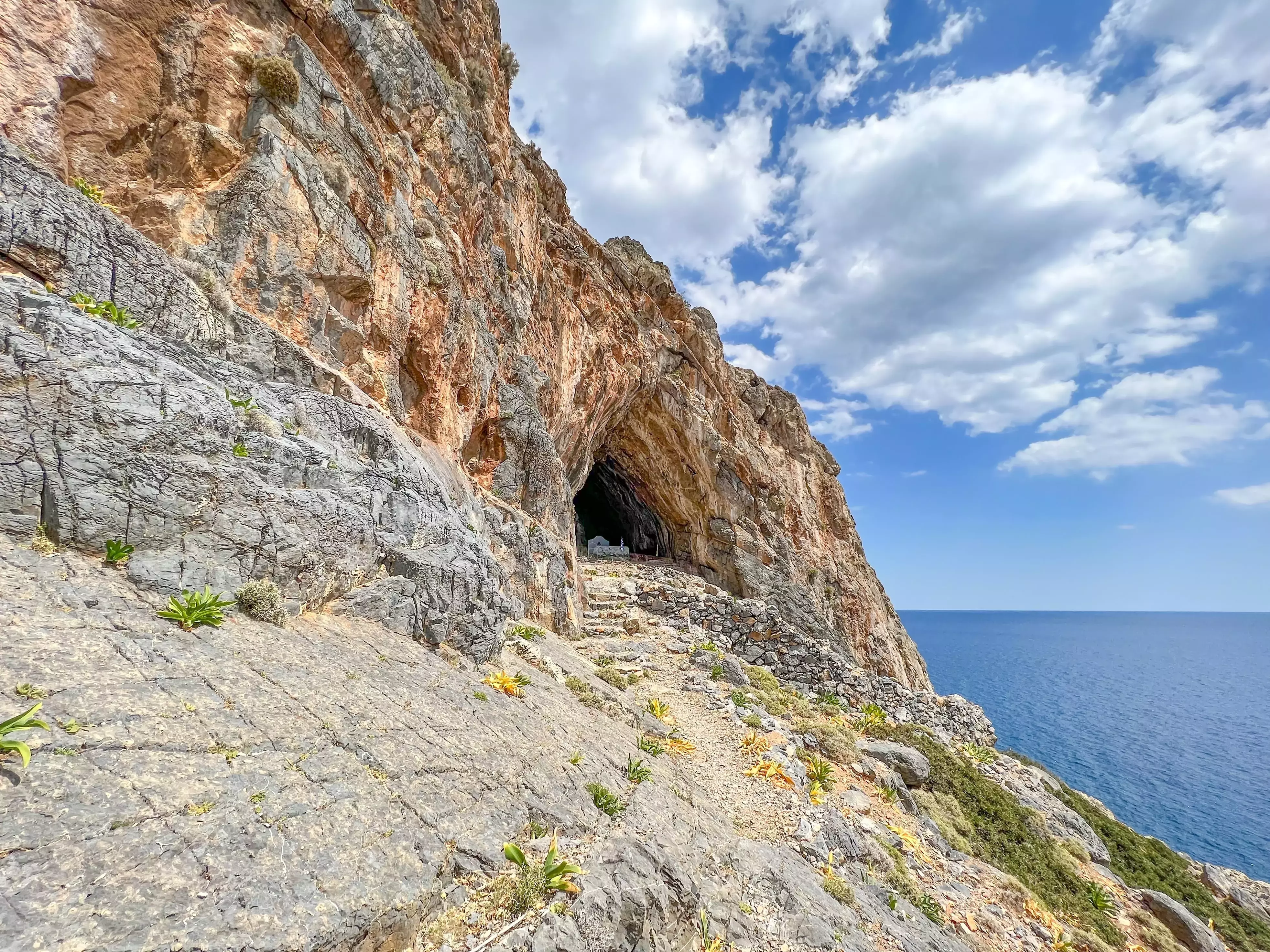
Not far from Amnisos is the Cave of Eleithyia, another key mythological site near Heraklion.
The cave is named after Eleithyia, the Greek goddess of childbirth and fertility. In Ancient Greece, very little was known about the process of childbirth, so their answer was to pray to the goddess of childbirth and fertility if a couple were trying to conceive or a woman was due to give birth.
In fact, this cave is rumoured to have been the site of several births in Ancient Greece, because many women who were due to give birth would come to the cave to pray to Eleithyia, and some would even end up giving birth in the cave.
The goddess Eleithyia is said to have assisted Zeus’ wife Leto in her birth of the twins Artemis and Apollo, who both became key figures in Greek mythology. It was after the birth of these twins that Eleithyia became such an important figure in Greek mythology.
5. Heraklion Archaeological Museum
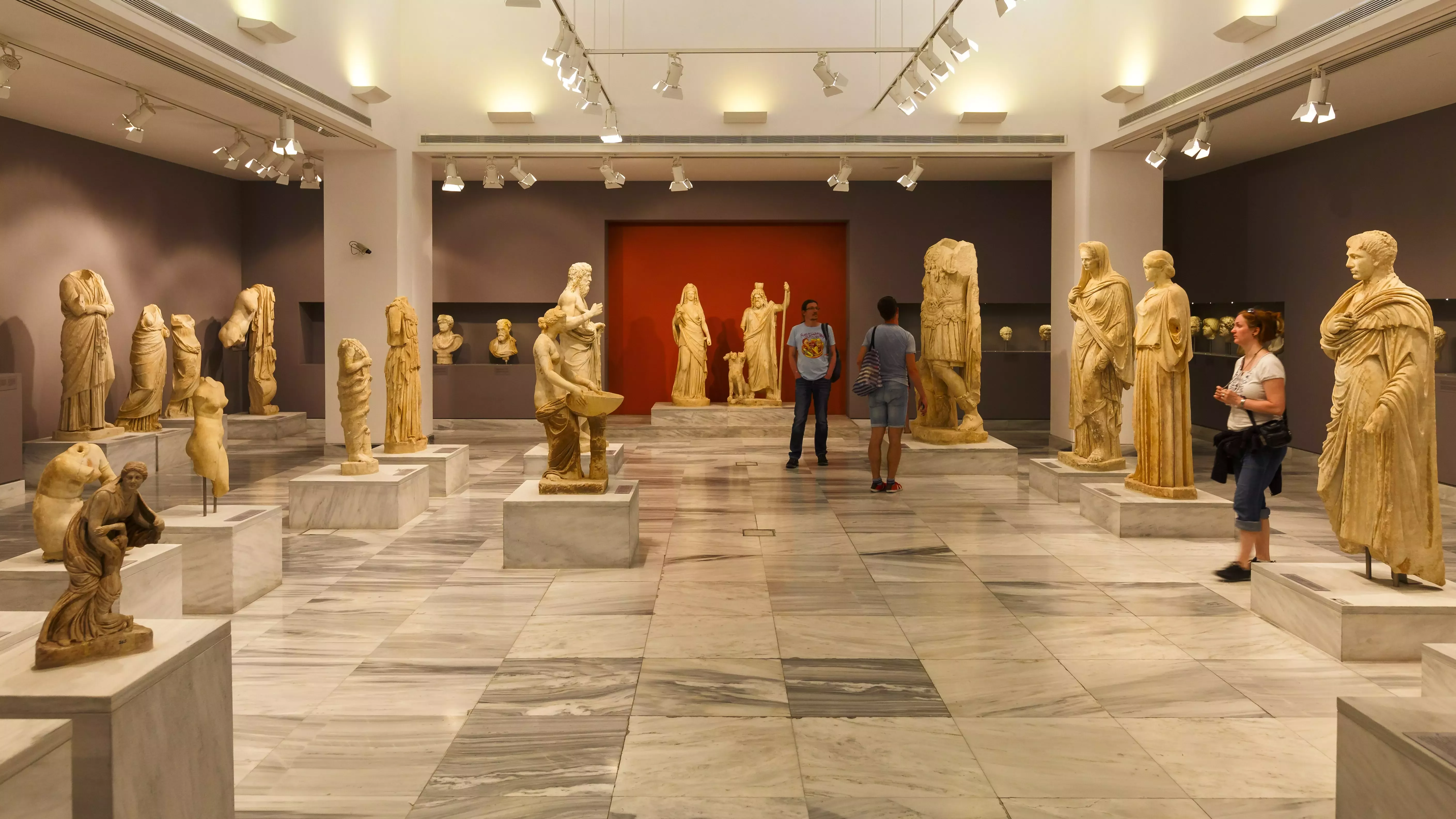
Found right in the centre of Heraklion is the Heraklion Archaeological Museum, which, despite being an archaeological museum, has numerous artefacts associated with Greek mythology, many of which date back thousands of years. It is also another hugely important site for understanding Minoan civilisation.
Among the vast collection at the museum are some very interesting figurines, such as one of a woman holding several snakes. It is believed that this woman was either a goddess who has been forgotten or perhaps a priestess.
There are also many statues and artefacts which depict bulls. Bulls have a strong link in Greek mythology, especially in Heraklion, which was the home of the minotaur and the bull-born son of King Minos.
There is lots of information and private tours available in the museum for those who want to explore and learn about the history and mythology of Heraklion and Ancient Greece.
6. Vathypetro
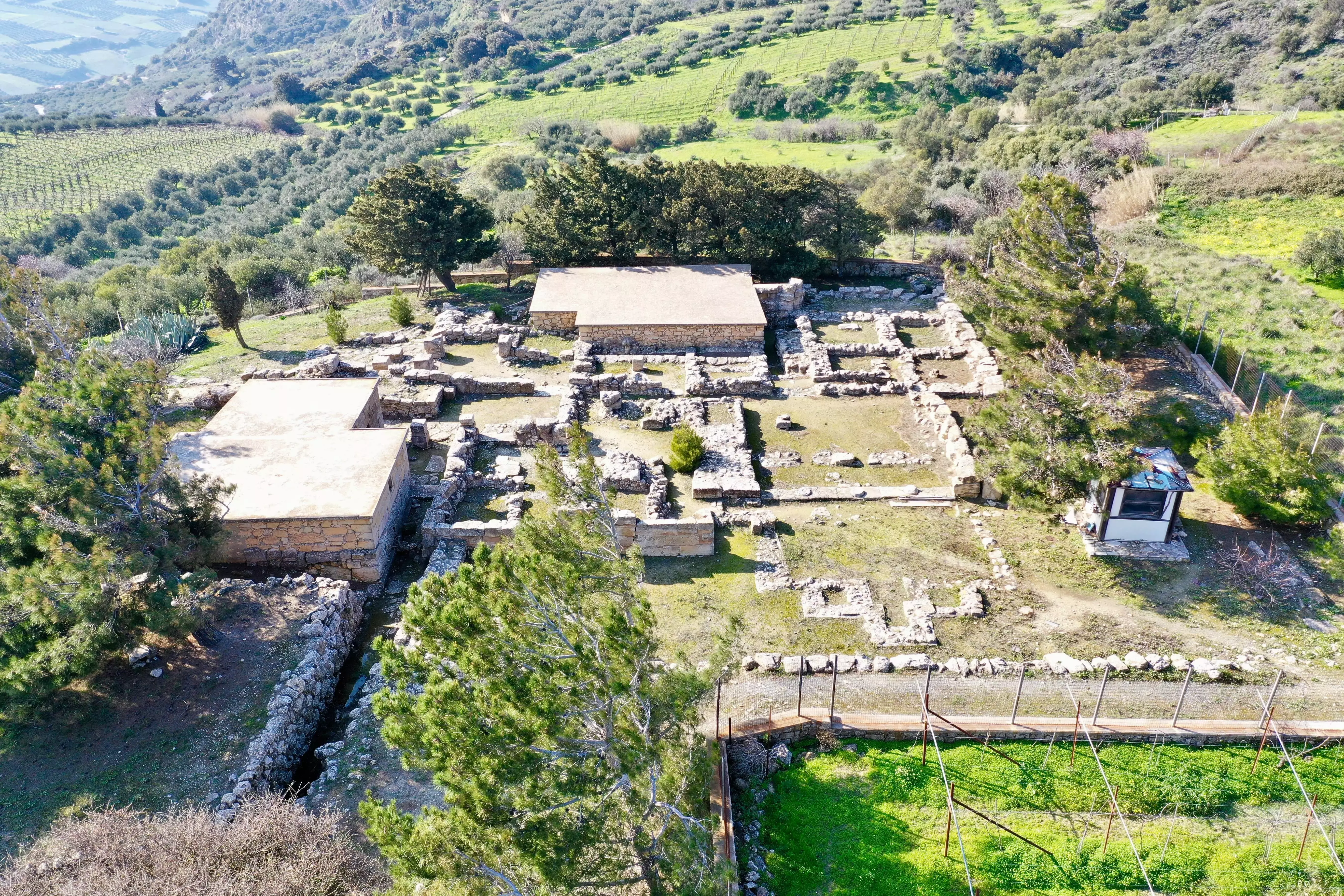
Another mythological site near Heraklion is Vathypetro. Now an archaeological site, it was once the site of several villas and most famously, wine presses.
While this may not initially seem a key link to the mythological history of Greece, it is nevertheless still important.
This is because it features one of the oldest wine presses ever discovered in the world. Because it is preserved so well and was obviously an important tool, it has been suggested that this wine press and indeed the site at Vathypetro is linked to the Greek god Dionysus, who, among other things, was the god of wine and vegetation.
Worshipping him would likely have involved lots of wine, so it is highly likely that this is one of the main sites on Crete where Dionysus was worshipped frequently, thus deserving a place on this list.
7. Mount Juktas
From his birth in the Dikteon Cave to his burial on Mount Juktas, Zeus is one of the key figures in Greek mythology, and this site just on the outskirts of Heraklion is a testament to that
Interestingly, this variant of the myth of Zeus is the Cretian variant, rather than the traditional Greek view. In this story, Zeus died and was buried on Mount Juktas. This is because, in the Crete tradition, he was born in Crete, so should be buried in Crete.
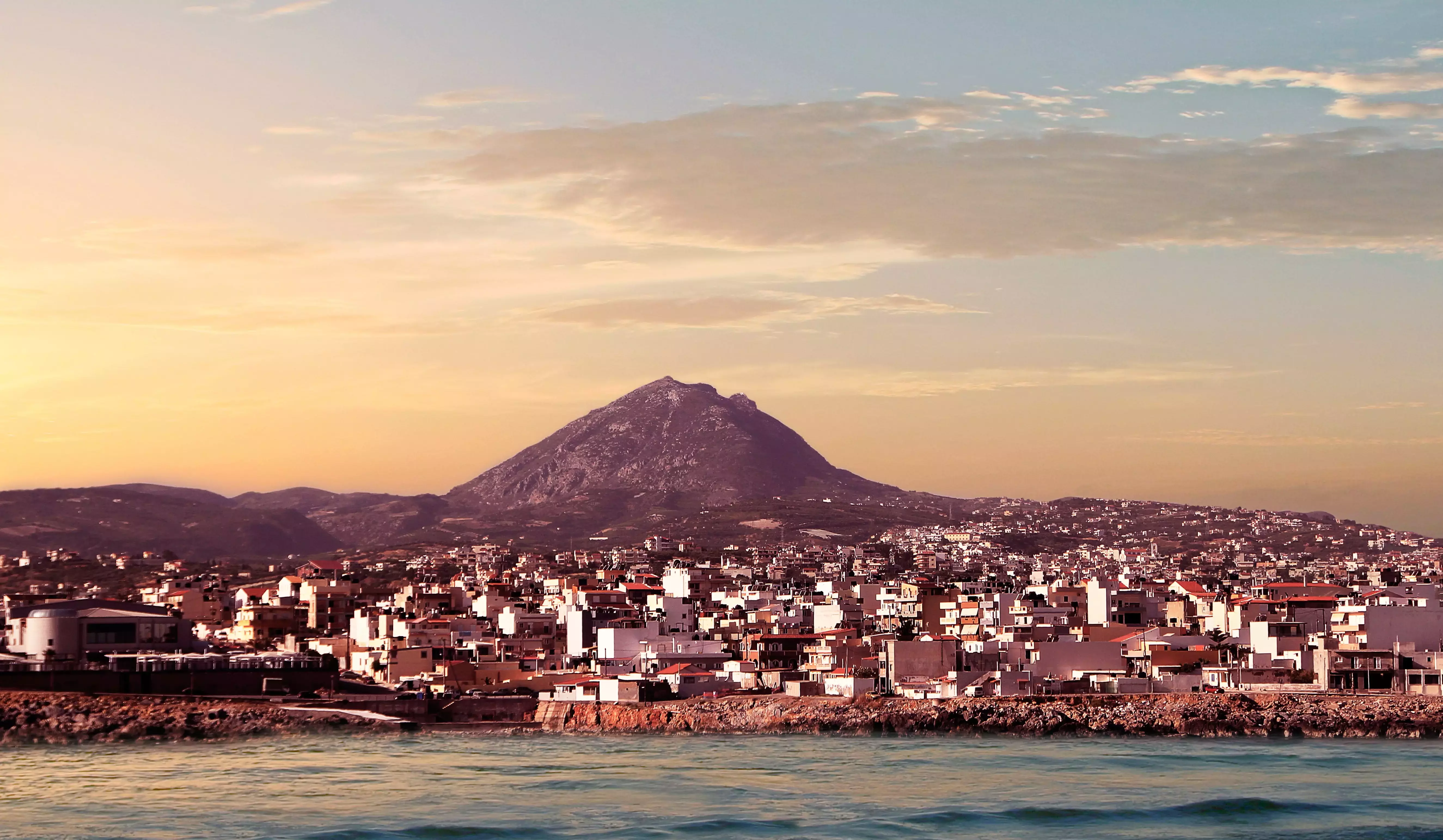
The mountain itself is also said to resemble Zeus’ face, and from certain areas in Heraklion, the mountain looks like a face, as if it was laid on a pillow.
The mountain was also the home to a sanctuary for the Ancient Greeks to worship Zeus, and parts of this can be found in the Heraklion Archaeological Museum now. Even so, a trip up the mountain is worth it, as the views from the top are stunning.
Get ready to plan your trip to Greece
ABOUT THE AUTHOR
Chester Ollivier
Chester is passionate about exploring new places through food, history and heritage. Whether he is uncovering hidden gems in North East England or travelling to exotic locations across the globe, his enthusiasm for food and history fuels his adventures. His love for writing, combined with his intrigue of different cultures and their histories has led him to pursue a career as a travel writer.