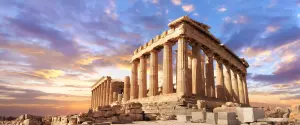
Everything You Need to Know Before Visiting Greece
Greece: the place where ancient wonders combine with thriving tourist hotspots to create the ultimate getaway. From its world-famous cuisine and islands to its Mediterranean climate and ancient ruins, Greece is a paradise of unparalleled beauty. The capital, Athens, is a history enthusiast's dream location. If you're here for the sun and the beach, Crete, Kefalonia or Zakynthos are your go-tos. For partygoers looking to dance the night away, head to Malia or Mykonos. And, for world-class food and drink options, try Thessaloniki.
With so many islands that each tell their own stories, it can be hard to know where in Greece to visit first. While Greece is a traveller's dream destination, there are still several things to bear in mind. We've created this ultimate travel guide to give you tips and advice on your upcoming trip to Greece. Find out about the language, culture, where to stay and where not to stay in this ultimate travel guide:
When’s the Best Time to Visit Greece?
This very much depends on your budget and the type of holiday you're looking to have. Budget travellers should consider travelling in the shoulder season, from September-November, and March-May. This time of year can give you a quieter experience without the large tourist crowds, as well as much cheaper prices on hotels. You can also find cooler weather here, which is ideal for people who aren't a fan of the scorching summer heat.
On the other hand, if you thrive in hot weather, then head to Greece from late May to late August. This will give you the best temperatures of around 33°C. This time of year is also the most expensive, however, so bear this in mind if you have a tighter budget.
Language Guide: What You Need to Know
English is widely spoken in Greece, particularly in larger cities and tourist areas. However, some rural areas of Greece will have people who aren't proficient in English. Roughly around 51% of Greeks are proficient in English and are able to speak it at a high level. Even so, it's likely that in hotels, restaurants or other tourist areas you'll be able to get by with just English alone. However, if you do plan on visiting less touristy areas, here are some basic Greek phrases you can learn that'll make you sound like a local!
Some key phrases to learn in Greek include:
“Hello” – “Yassas/Yassou.”
“Good Morning/Good Afternoon” – “Kalimera/Kalispera.”
“Where is the train station, please?” – “Poú íne o stathmós tu trénu?” (pou-een-o-stathmos-tu-trenu)
“Please/Thankyou” – “Parakalo/Efcharisto” (ef-ka-risto).
“Do you speak English?” – “Milate anglika?” (mil-ah-tay ang-lee-ka)
“I don’t speak Greek” or “I need a translator” – “then milao ellinika” (then-mill-ow-ell-ee-neeka) / “chreiázomai metafrastí” (hree-az-o-meh meeta-frasti)
“Yes/No” – “Nai/ochi” (oh-hee)
“I need help/assistance” – “chreiázomai voitheia” (hree-az-oh-meh voh-ee-thee-a)
Staying Safe While Travelling in Greece
Greece is, for the most part, a safe country for both tourists and locals. However, there are certain things you need to be aware of. Things like petty crimes, for example, bag snatching or tourist scams, can occur in tourist areas. It's important to keep your belongings on you at all times, and don't flash valuables around. Also, stay more alert and wary of your surroundings in larger cities like Athens or Thessaloniki.
Although Greece has generally free healthcare, it may not be free for tourists coming from the UK or elsewhere. Ensure you have health insurance with an EHIC card when travelling to Greece. In an emergency, the number to call is 112, which is the same for most other European countries.
How Much Does a Trip Cost?
Those on a tight budget can expect to spend around €25-50 per day on accommodation, transport and attractions. For more mid-range budgets, expect to spend around €50-100 per day, while luxury budgets can spend upwards of €200-300 per day. For the cheapest cities to stay, choose Athens, Thessaloniki, or Rhodes. Avoid popular tourist areas like Santorini or Mykonos if you want to cut costs.
Best Cities to Visit in Greece
Each city and island in Greece tells its own tale of cuisine, history, culture and attractions. With such a diverse range of things to do and see, you may be wondering where to even start. Here are some of the best cities to visit in Greece:
Athens:
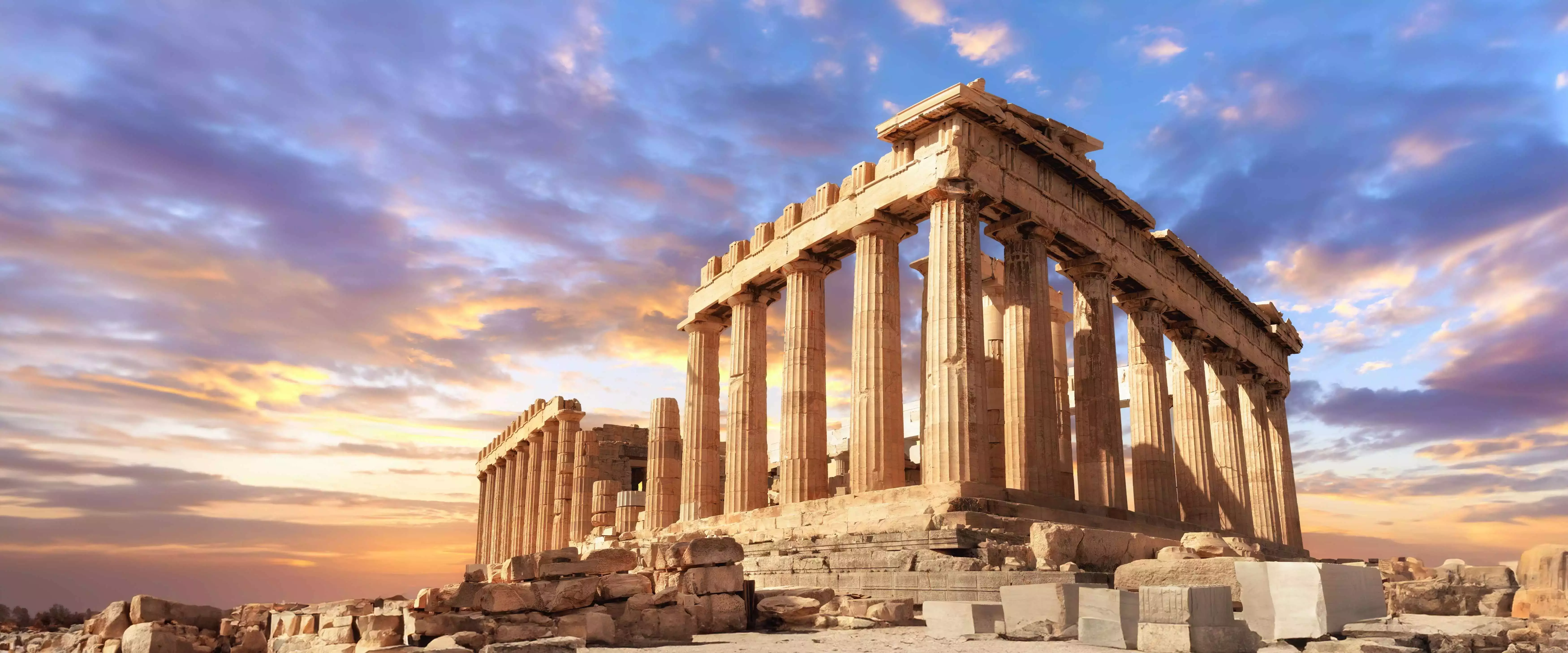
What to do: The Greek capital, Athens, is rife with historic and cultural charm. Visit the Acropolis, National Archaeological Museum, or explore the Ancient Greek temples of Zeus and Hephaestus. Athens effortlessly blends ancient charm with a lively nightlife scene. There are bars aplenty here, and a wide range of shopping and dining options too.
Where to stay: You should try Plaka, Anafiotika and Keramikos. These areas offer the perfect blend of history, proximity to top attractions and nightlife.
Average cost: Athens is definitely one of the more affordable cities in Greece. Aim to budget around €50-€150 per day in Athens.
Heraklion:
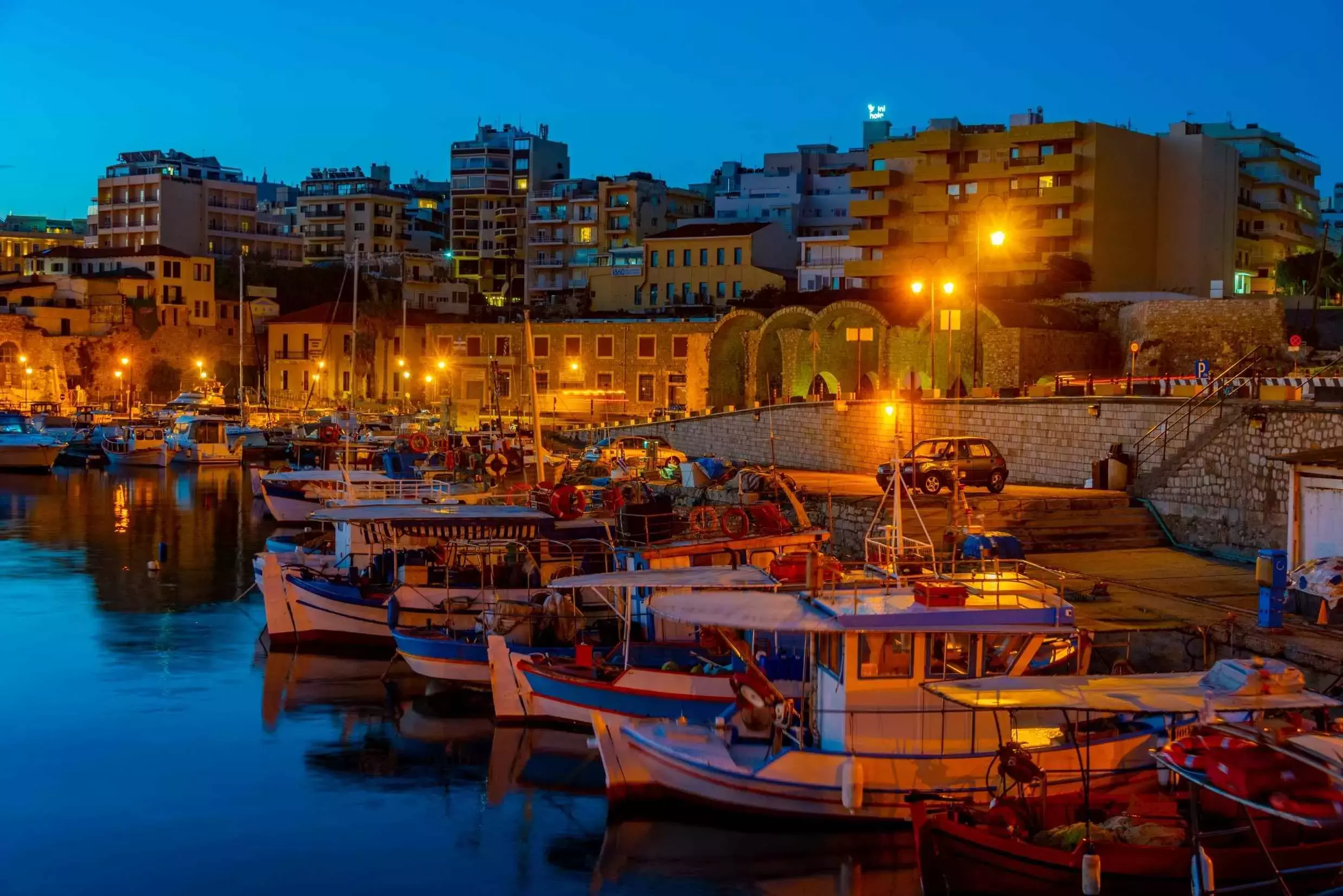
What to do: The capital of the island of Crete, Heraklion, is best known for its ancient ruins and beaches. Head to the Archaeological Museum or Morosini Fountain, or spend the day exploring the coastline.
Where to stay: Consider staying in Ammadoura, in the nearby party town of Malia, or in Heraklion’s historic Old Town district. These areas are known for their abundance of things to do, and excellent transport links.
Average cost: Depending on your budget, you can expect to spend around €80-€130 for budget travellers, or around €300-400 for more high-end budgets.
Santorini:
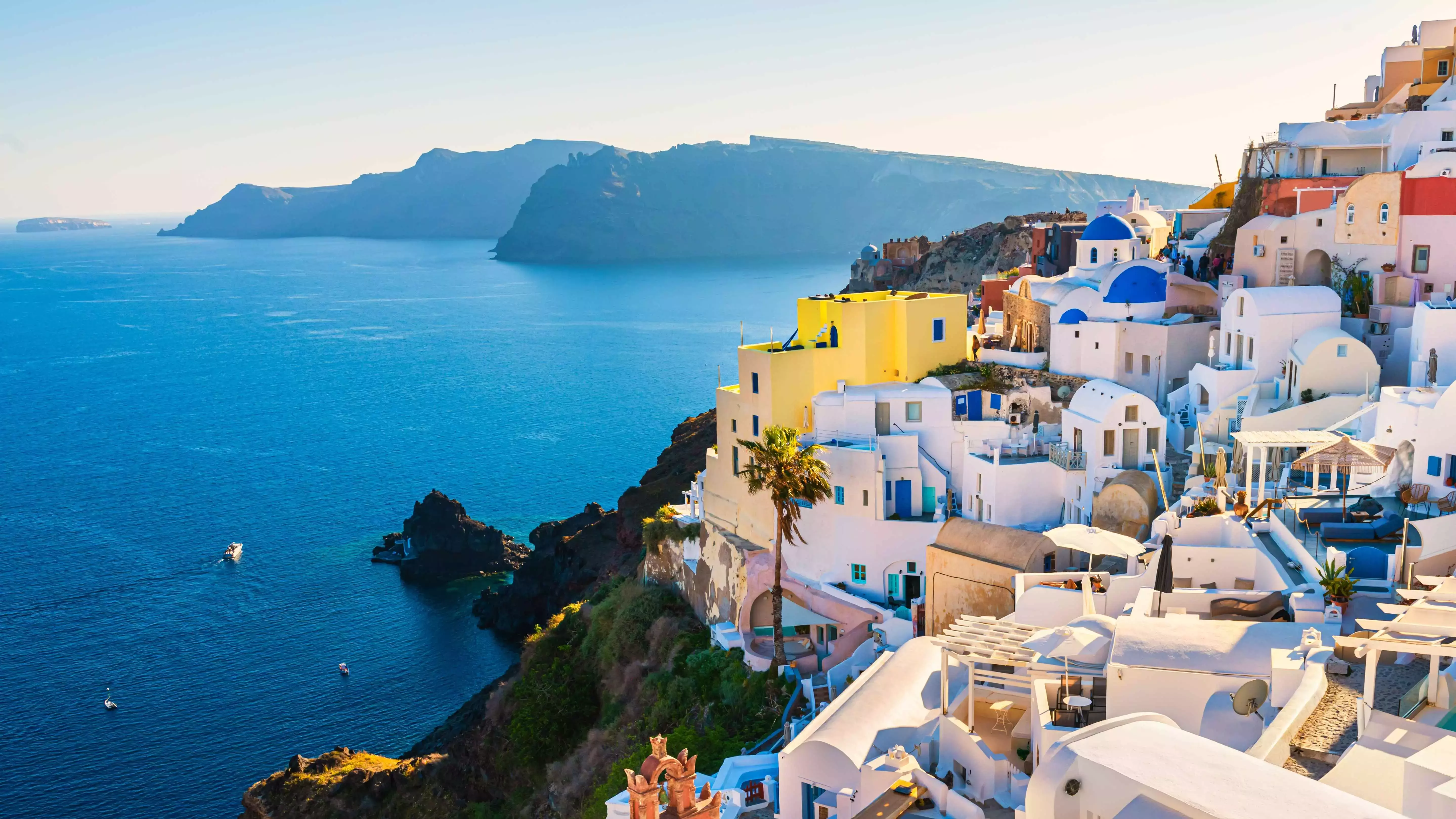
What to do: One of the most popular Greek islands, Santorini is known for its whitewashed cliffside buildings and its beaches with uniquely-coloured sand. Head to Red Beach or the ancient Akrotiri ruins.
Where to stay: Some of the most popular areas to stay in Santorini include Oia, the lively capital Fira, or Kamari. Kamari is more budget-friendly, and Oia and Fira are popular with all types of travellers, making them more on the expensive side.
Average cost: Aim to budget around €100 for your trip to Santorini. This, of course, can vary depending on where you stay, but €100-200 is a good starting point.
Mykonos:
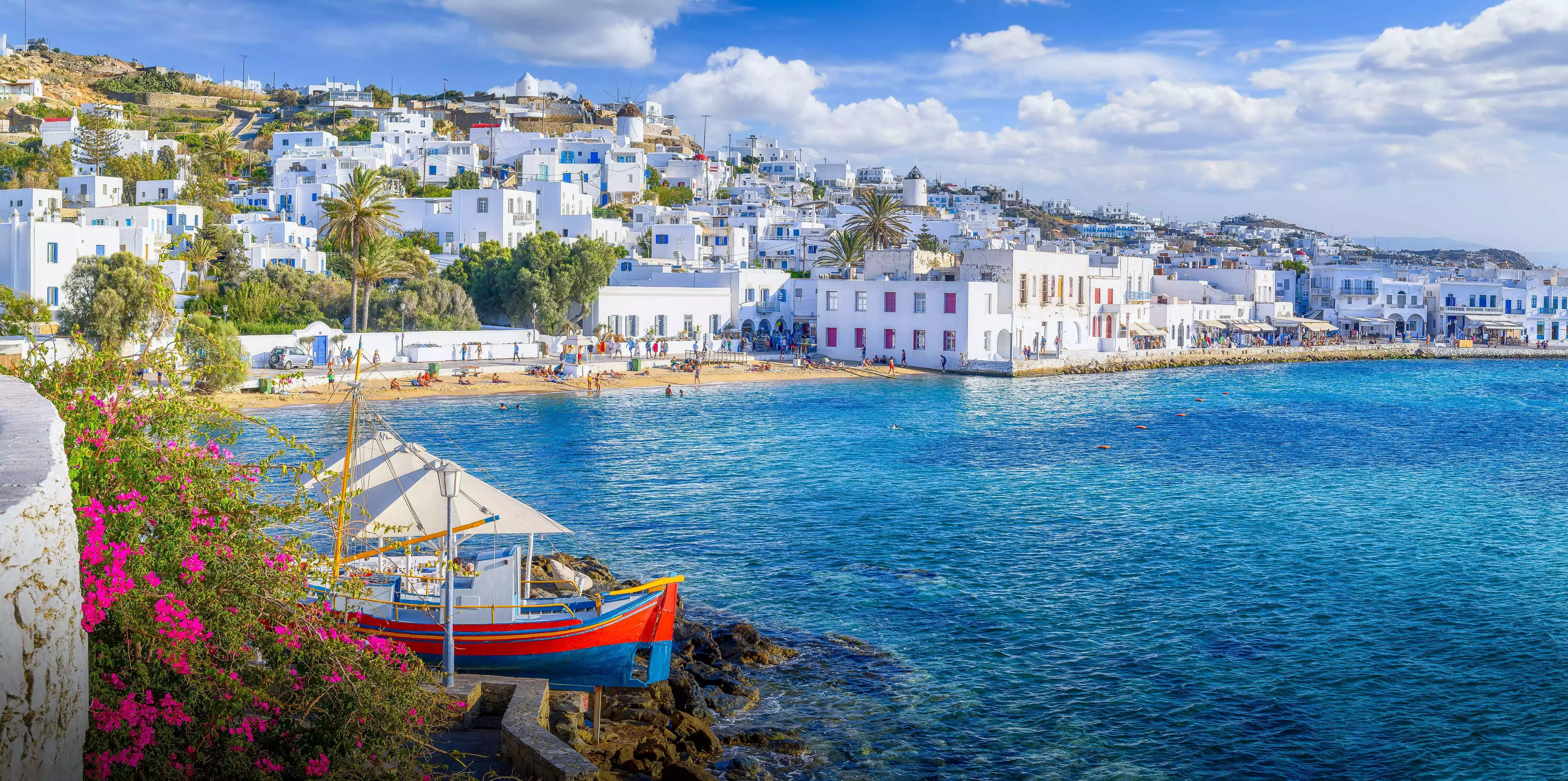
What to do: Mykonos is another popular island, also known for its whitewashed buildings and its vibrant party atmosphere. Expect to find music blasting across the island, while people explore the buildings, historic sites, and museums.
Where to stay: Some of the best places to stay in Mykonos include Ornos, which has a more laid-back, family-friendly atmosphere, or Platis, which is more on the lively side. Where you stay is heavily dependent on your budget.
Average cost: Budget travellers will be able to get by with a budget of around €100-€150, while luxury travellers will likely spend more in the vicinity of €200-300.
The Big Experiences You Don’t Want to Miss
From boat trips, tours of ancient sites, taking a food tour, or Greek-island hopping, waste little time getting stuck into everything Greece has to offer. Head to Mykonos or Malia for vibrant boat parties and DJ sets. Those wanting a more laid-back experience will gravitate towards Syfnos, Athens or Heraklion. Avoid popular islands if you want a cheaper and quieter experience, or consider travelling in the shoulder season.
Hidden Corners of Greece
So, you've learned about Greece's top islands and tourist hotspots, but what about the other end of the scale? Greece's far, unfrequented corners are well worth exploring. And a memorable and fulfilling touch to your trip by going a little more off the beaten path. Whether through its islands or barely visited sites, Greece has some pretty well-kept secrets.
If you want to experience a tranquil escape without lively tourist crowds, head to the islands of Folegandros, Spetses and Sifnos. Try the medieval town of Monemvasia for an immersive look into the past. Or, visit Meteora, which is a formation of rocks that feature monasteries, and is a UNESCO World Heritage Site.
How to Avoid Tourist Scams and Traps in Greece
Unfortunately, although rare, tourist scams and traps can still occur in Greece. The main types of scams usually involve taxis or people overcharging unsuspecting tourists. It's important to familiarise yourself with local taxi prices so you can challenge them if you feel you're being overcharged for a trip. Scams can also occur through excursions or tours, so it's important that you book through reputable sites or companies that have a good reputation. Ask at your hotel or visit travel sites for some good examples of reputable tour or excursion companies.
Petty crimes like pickpocketing or theft can also occur in larger cities or popular tourist sites. Areas like the Acropolis, on beaches or in nightclubs can experience theft and pickpocketing. To avoid this, it's important to carry a practical safety bag for your valuables and avoid wearing noticeably expensive or designer clothing where the brand is clearly visible.
Handy Tips and How to Plan Your Trip
We've got the lowdown on important tips and advice for travelling to Greece. Firstly, consider booking your hotel through travel platforms or sites. Many sites like these feature hotel comparison tools and offer regularly updated hotel deals. If you're travelling with a tight budget, any deals you can find will be music to your ears.
Also, ensure you familiarise yourself with local prices and where best to avoid, to be more likely to prevent and avoid scams. If you're going to be travelling around mainland Greece or visiting a less frequented island, learn a couple of basic Greek phrases. While a large percentage of the population speaks good English, proficiency in the language is less common in more rural areas or places with fewer tourists.
This may feel like a given, but ensure you have everything sorted and in order before you go, such as health insurance and accommodation. If you're going to be taking a road trip, there are many places across Greece where you can hire a car at very reasonable rates. Well, now that you've got all the information you need, you're ready to visit Greece without any worries or stresses.
Get ready to plan your trip to Greece

ABOUT THE AUTHOR
Lauren Coton
I love discovering and writing about new places which then get added to my now extensive travel list, but nowhere beats the comfort of my hometown Bristol or the sense of culture and community that my base of Cardiff exudes. That's why travel writing was a given for me.
SIMILAR ARTICLES
The Complete Travel Guide to France
The Complete Travel Guide to Portugal

The Complete Travel Guide to Italy
The Complete Travel Guide to Spain
MOST POPULAR
newsletter