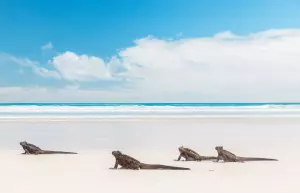
Stepping off the plane at Baltra Airport, a few things hit me instantly: the heat and humidity (which I’d come to learn was unseasonable for late May), the thrilling feeling that I’d arrived somewhere important, and the hour-long queue to enter the Galapagos. The marine iguana lazily patrolling the airport grounds felt like the perfect welcome, too.
All of these play into each other to say something about travel in the Galapagos today. The queue to pay the $200 entry fee is controversial but necessary if tourism in the Galapagos is going to continue without significantly harming the environment and communities. The marina iguana is a symbol of the delicate Galapagos balance, wildlife and humans sharing the same space. And the unseasonable heat felt like a quiet warning that even the most resilient ecosystems on our planet are changing.
Responsible travel guide: The Galapagos Islands
Tourism has transformed the Galapagos. It has brought jobs, funded conservation projects, and connected one of the world’s most isolated ecosystems with millions of visitors. But it has also increased the pressure on fragile habitats, infrastructure, and local communities. Travelling responsibility isn’t about avoiding the Galapagos, it’s about making choices that ensure your visit benefits the islands long after you’ve left.
Entering the Galapagos responsibly
Getting to the Galapagos Islands isn’t as simple as jumping on a flight. Before you arrive, you’ll have to fill out a TCT (Transit Control Card) which monitors tourist numbers. You can do this at Quito Airport or Guayaquil Airport before hopping on your flight, but we recommend filling this out online before the airport to save time. Then, you’ll get your bags checked during a biosecurity inspection to make sure you don’t have anything that can harm the ecosystem. Even fruit, seeds, and soil can be invasive species. This is all before you’ve even checked in, so get to the airport with plenty of time.
Non-Ecuadorean nationals must pay the $200 National Park fee on arrival. You must pay this in cash. The fee was increased from $100 in August 2024, but it’s a crucial contribution towards conservation projects, local communities, and other national parks on the mainland that don’t receive as many tourists but need the support.
Why is the Galapagos entry fee $200?
The fee helps fund conservation, bio security, park management and support for other protected areas in Ecuador.
Best time to visit the Galapagos
Mid-June to early September and mid-December to mid-January are the busiest months in the Galápagos Islands. Visiting in the shoulder months, like May and October, is a great way to support businesses outside of peak seasons. I visited with Uniquely Galapagos in late May, and although the weather is typically a few degrees cooler at that time of year, it was a beautiful temperature for exploring. But rather than the weather, it’s the wildlife calendar that you’ll want to follow.
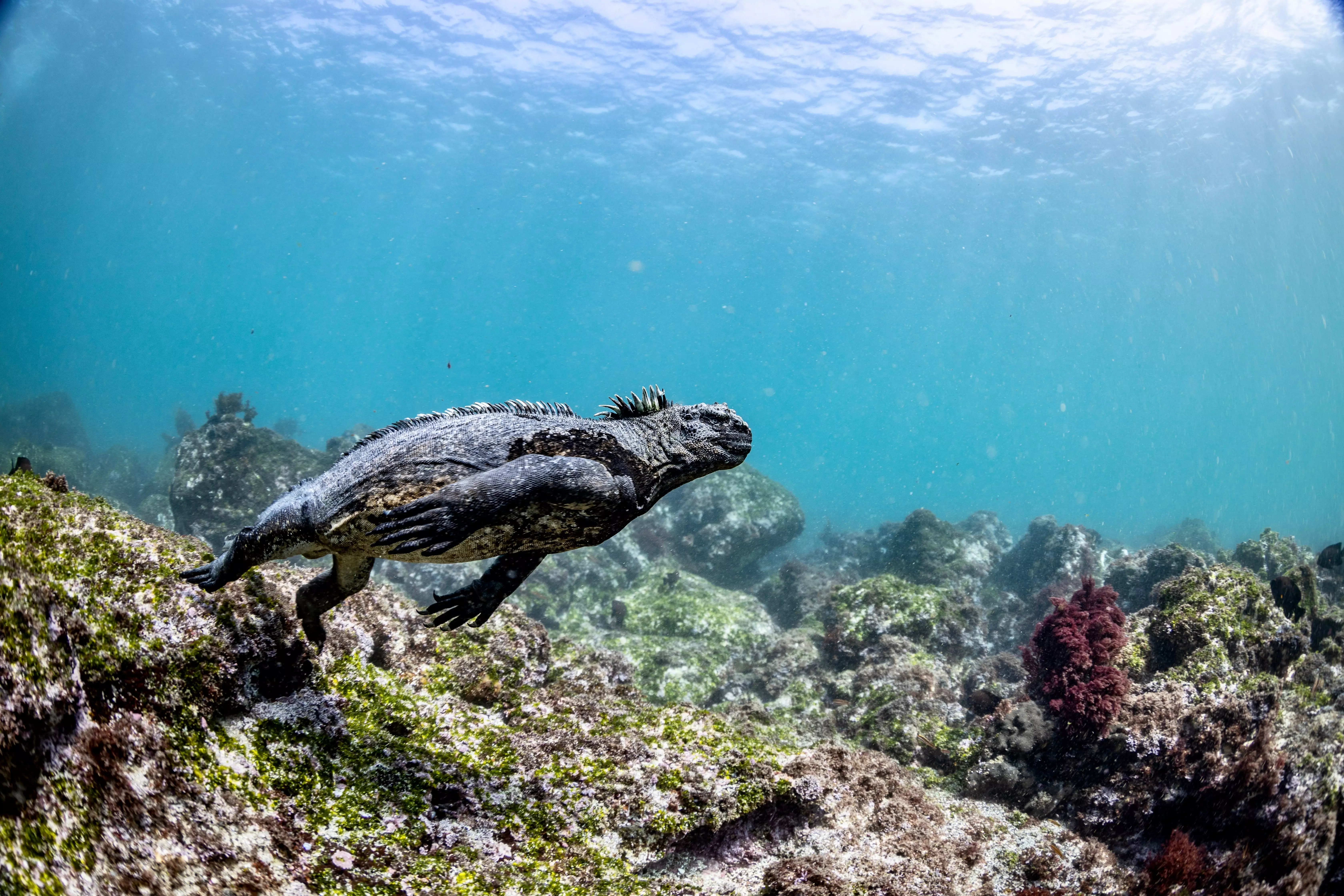
In May, baby marine iguanas are hatching on Santa Cruz, and blue footed boobies are still doing their courtship dances. It’s also the tail end of the rainy, warmer season and some of the last clear blue skies before the cooler season.
In October, the dry, cooler season is starting to come to an end, and the days are generally warming up. It’s also mating season for sea lions, lava herons are nesting, and blue footed boobies are raising their chicks.
Cruise vs Land Based Trips
One of the biggest questions when it comes to planning a Galapagos trip is ‘should I do a cruise or a land based trip?’.
Wildlife: Cruises
There are remote islands in the Galapagos that day boats just cannot reach. Cruises are better than land-based tours for seeing a wider variety of rare wildlife. Española, for example, is the best island to see nesting Albatross, and boats typically travel there overnight. However, you’re still very likely to see giant tortoises, sea lions, various birds, and marine iguanas on a land-based tour.
Flexibility: Land based
Cruises follow a schedule — everyone eats together, shares the same spaces together, and takes activities together at a set time. If you’re someone that prefers flexibility, it might feel a little rigid. Land-based tours, particularly private ones, allow you to decide on timings with your guide. You’ll also generally have evenings to explore by yourself, choose when and where you want to eat, and other local exploration.
Community: Land based
On land-based trips, you stay on the islands and have the chance to meet locals. The Galapagos is one of the most fascinating places in the world and every Galapageno has a story to tell. If you get the chance to learn about how their family came to the islands, it feels like a true privilege.
It’s also the most effective way to support the local economy. Supporting locally owned businesses, tour orators, restaurants, and more, directly contributes to the island economy.
Sustainability: Cruises
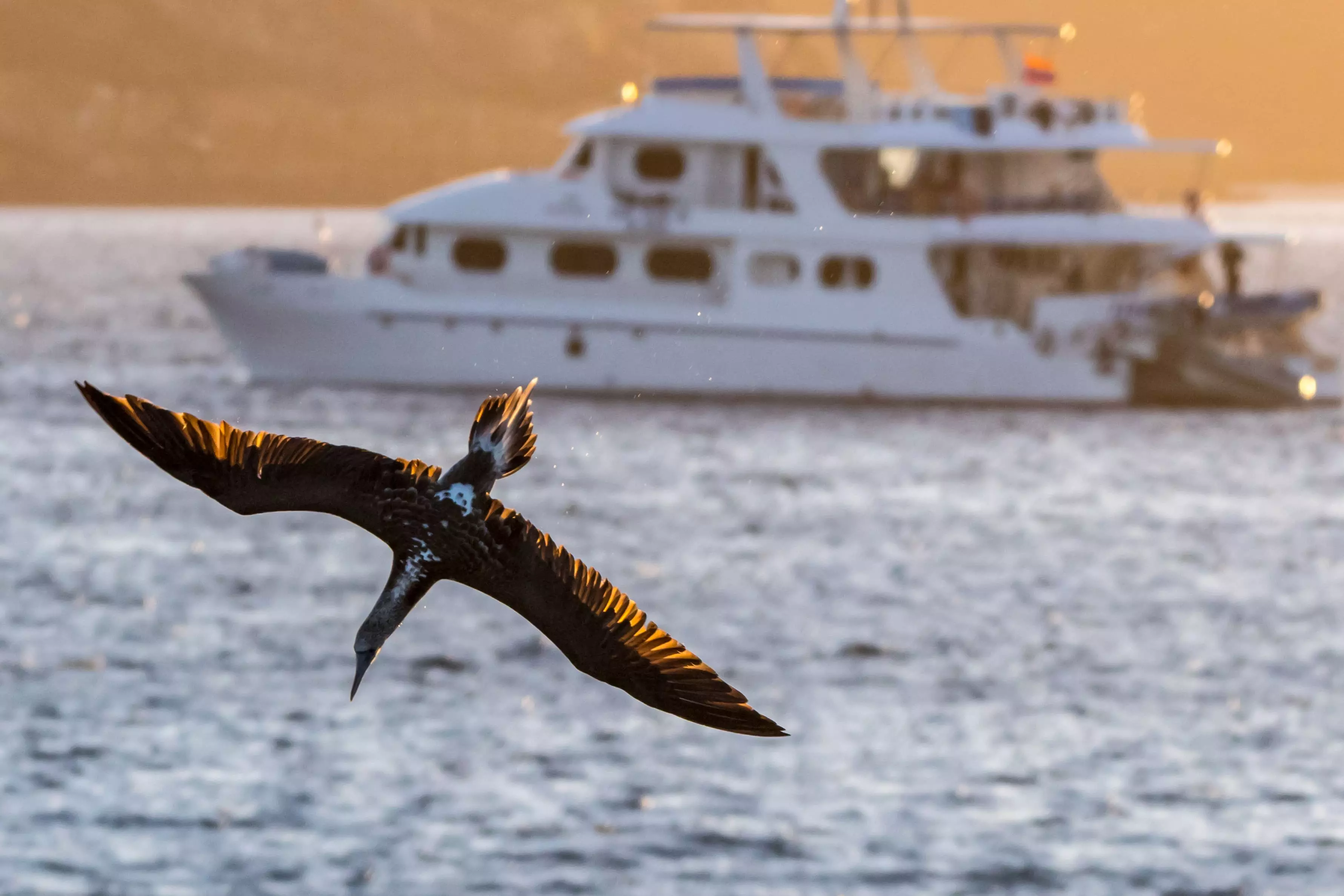
Boats in the Galapagos have to follow strict emission regulations, so cruising is a surprisingly sustainable way to explore the islands. Many boats also have efficient waste management and centralised eco-friendly technologies.
However, there are tour operators offering low-carbon footprint, sustainable land-based experiences. And there are several eco-certified hotels on islands like Santa Cruz and San Cristobal.
If you can, I’d do a mix of both. Uniquely Galapagos offer bespoke itineraries that can combine the best of land-based adventures and luxurious cruises.
Where to stay in the Galapagos
Eco-certified hotels are the best option for staying in the Galapagos sustainably. When looking for a sustainable hotel in the Galapagos, check if the hotel:
- Employs local staff
- Buys local produce
- Minimise single-use plastics
- Manage water efficiently (fresh water is scarce on the islands)
- Recycle
- Have energy initiatives
On Santa Cruz, Ikala Hotel is modern, sleek, and well located in Puerto Ayora, with a focus on energy efficiency and waste management that make it a top choice for eco-conscious travellers.
Wildlife rules in the Galapagos
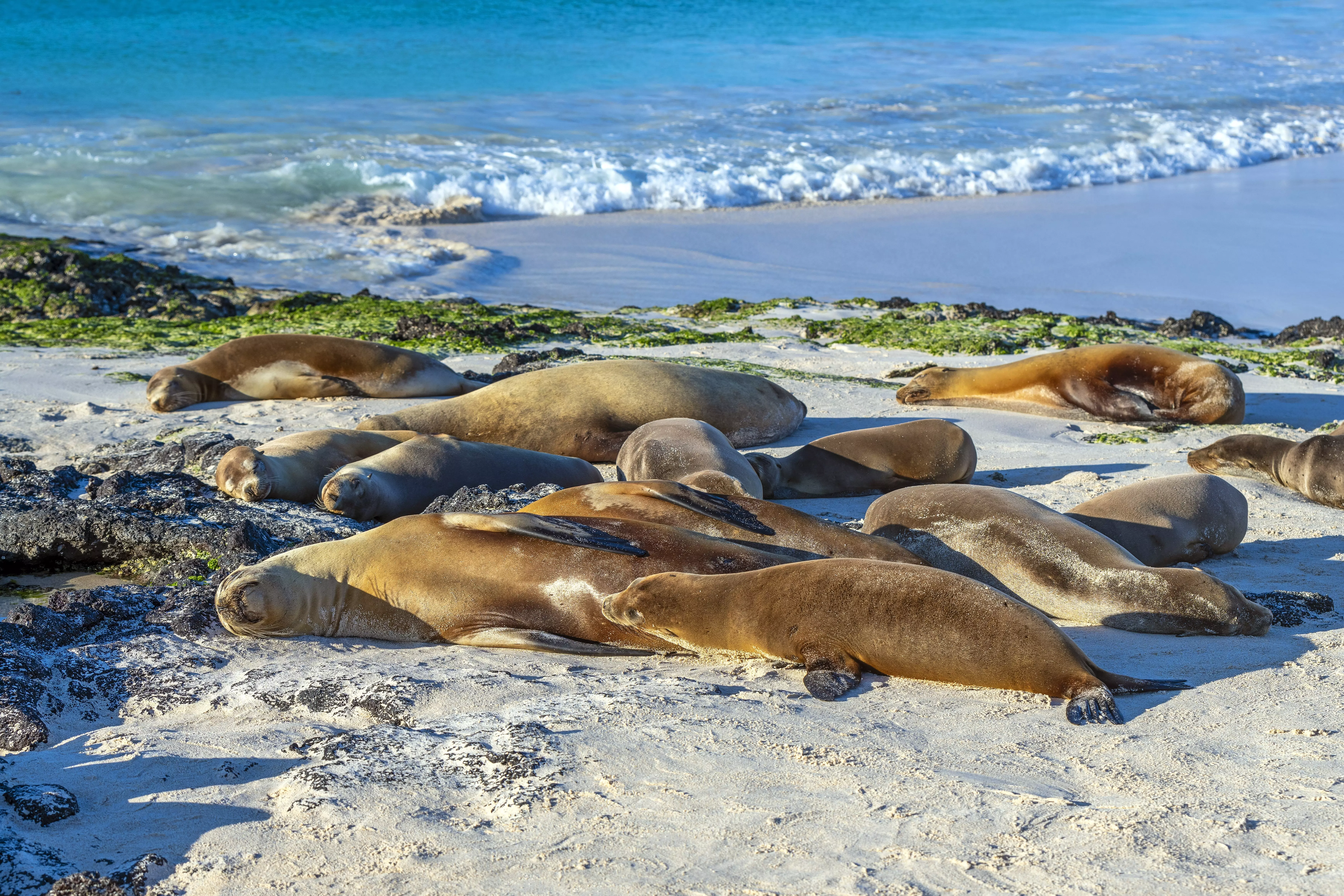
Among the tortoise crossing road signs on Santa Cruz, there are signs everywhere to keep a 2 metre distance from the wildlife. During my trip to Puerto Ayora, I saw a group taking pictures very closely of a sleeping sea lion, and a local told them they were too close. People respect the wildlife rules here, and they make sure everyone else does too.
Although the animals don’t always adhere to the 2 metre rule themselves, especially the sea lions on San Cristobal Island. I’ve come into contact with the cutest, playful sea lions while snorkelling off Tijeretas Dock, and I’ve also come too close to a territorial male. Try to keep as much distance as possible. It’s their island, we’re just passing through.
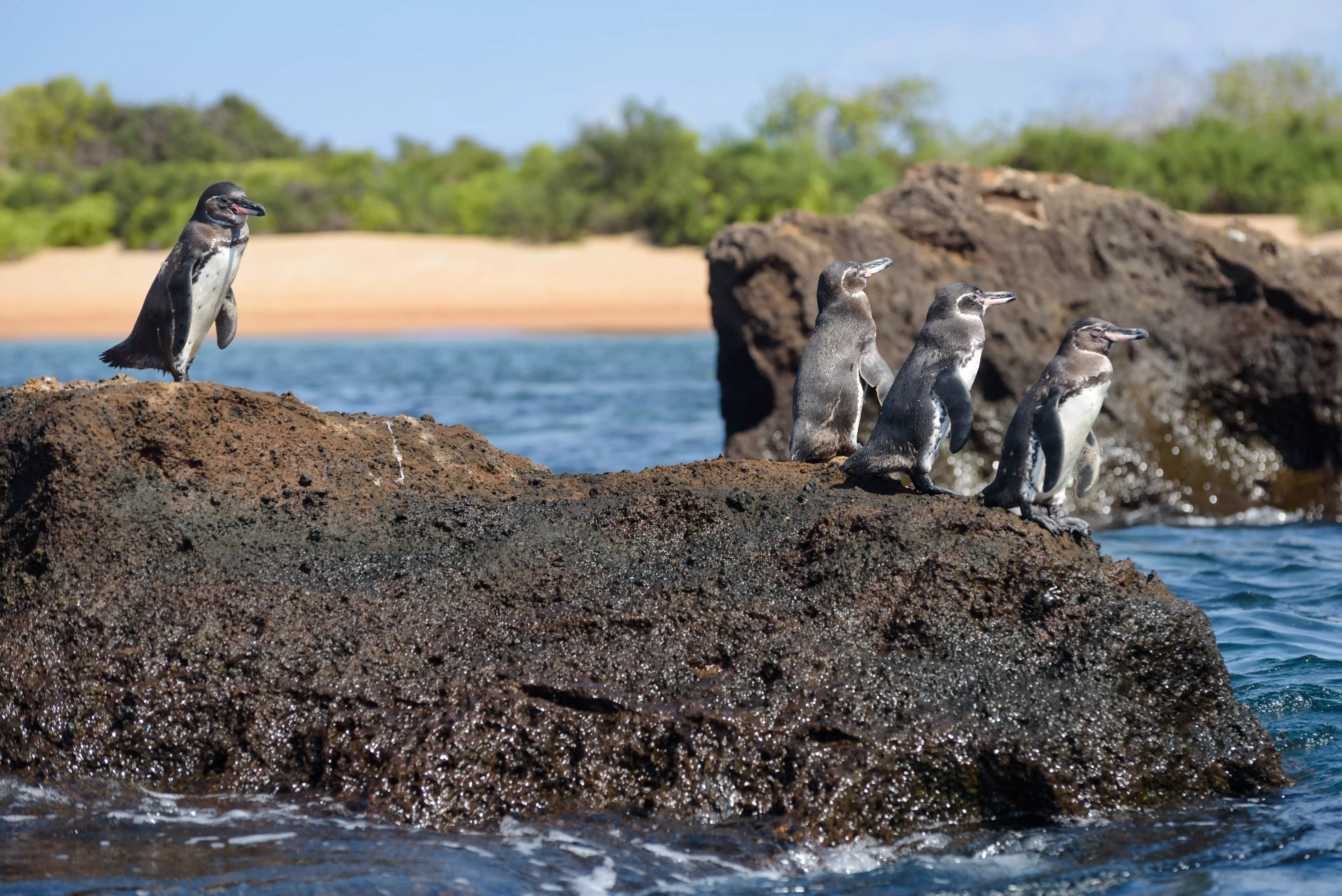
While it might seem like animals and humans live in domestic harmony, the animals are still wild. You must not touch or feed them — doing so can interrupt their feeding routines and change their behaviours. If you’re taking a picture, never use the flash. Drones are not permitted, either.
You must adhere to general wildlife rules, too, like not starting any fires and not sticking into any stones, coral, shells, or flora in your pocket as souvenirs.
Responsible travel tips in the Galapagos
- Eat at locally owned restaurants
- Buy chocolate made on Santa Cruz
- Visit coffee farms
- Visit local breweries
- Choose local guides
- Carry a reusable water bottle, most hotels have water stations
- Book longer stays rather than rushing islands
- Avoid touching wildlife even if they approach you
- Walk instead of taxis (even though they’re temptingly cheap!) around Puerto Ayora
- Explore islands by eco-bike
7-Day Sustainable Galapagos Itinerary
During my week in the Galapagos, I travelled with Uniquely Galapagos on a land-based itinerary centered around combining the archipelago’s iconic wildlife with community-led experiences. Here’s how we spent 7 days exploring the islands responsibly.
Day 1: Arrival & meet the giant tortoises
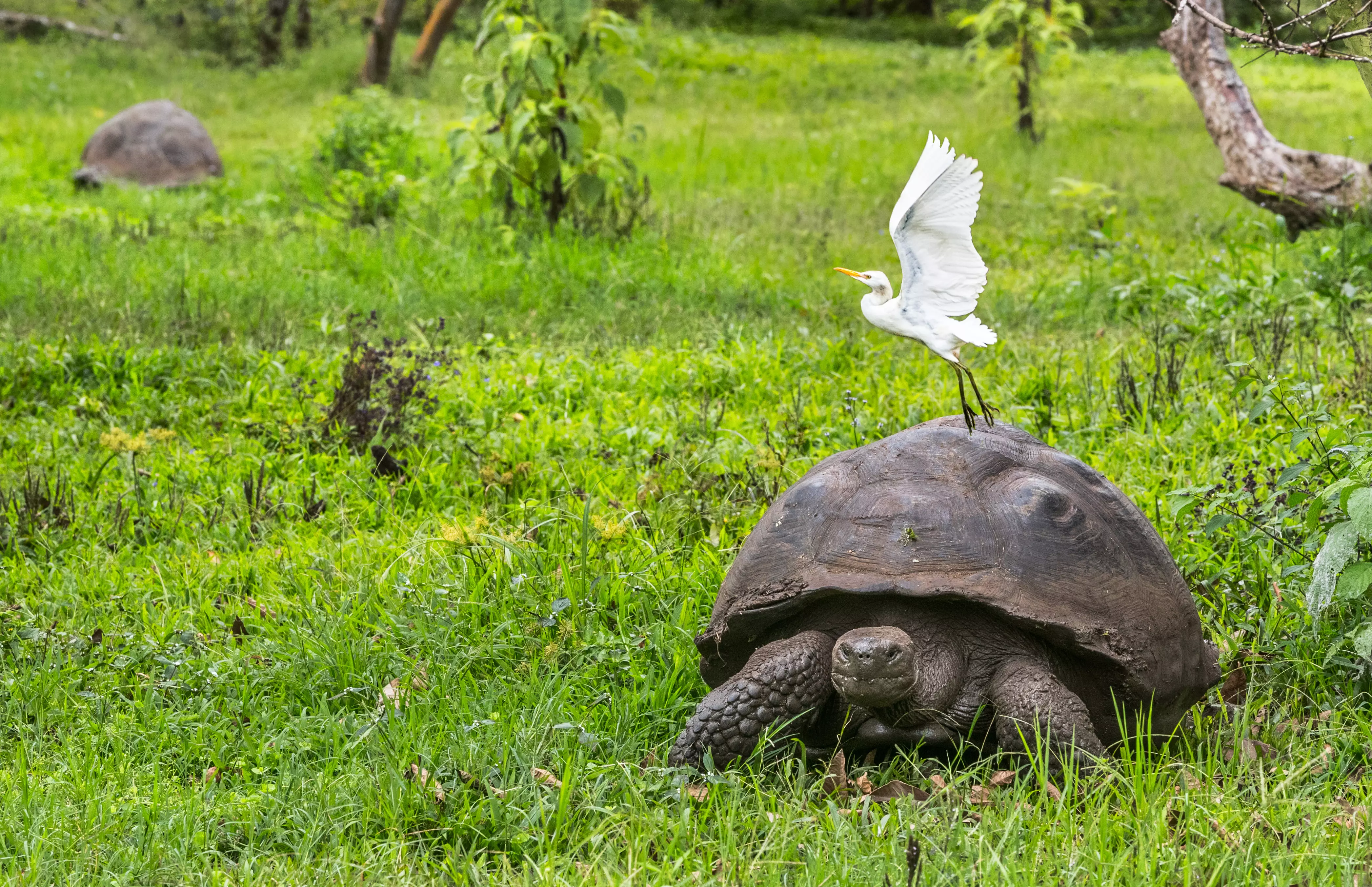
After landing at Baltra Airport and crossing to Santa Cruz, spend your first afternoon visiting El Chato Ranch. See giant tortoises roam freely in their natural habitat for the perfect introduction to the Galapagos. Finnish the day exploring Puerto Ayora’s waterfront and enjoy dinner at one of the locally owned restaurants.
Day 2: Conservation & Tortuga Bay
Start the morning at the Charles Darwin Research Centre and learn about the conservation projects protecting the islands’ species. Afterwards, pick up a low-carbon lunch from Galapagos Deli and walk the scenic trail to Tortuga Bay, one of the most beautiful beaches in the Galapagos.
Day 3: Boat trip to Bartolome Island
Take a day boat to Bartolome Island, famous for its volcanic landscapes and the iconic Pinnacle Rock viewpoint. After visiting the island, you’ll be taken snorkelling where you can see penguins, sea lions, baby sharks, and more. It’s one of the Galapagos’ most iconic excursions for good reason.
Day 4: Food, culture & beaches
Responsible travel isn’t just about the wildlife. Spend the morning learning to prepare traditional Ecuadorean dishes during a farm-to-table cooking experience before heading to Playa de los Alemanes (German Beach) for an afternoon swim or snorkel. It’s a slower-paced day that offers a deeper connection with island life.
Day 5: Explore the Highlands by e-bike
Swap a car for an e-bike tour through Santa Cruz’s lush highlands. Along the way you’ll visit coffee plantations and nature reserves while learning about the islands’ communities and conservation initiatives. Travelling by bike offers a quieter, lower-impact way to explore beyond the coastline.
Day 6: Kayaking, wildlife & local beer
Begin the day kayaking through calm coastal waters, keep an eye out for sea turtles, rays and blue-footed boobies. Depending on the season, birdwatching and snorkelling reveal even more amazing biodiversity. End your adventure with a visit to the Santa Cruz Brewery, where locally brewed beer provides the perfect toast to an unforgettable week.
Day 7: Continue your adventure or head home
Use your final morning to explore Puerto Ayora one last time before either catching your flight from Baltra Airport or continuing your adventure to islands such as San Cristobal or Isabela. You’ll be leaving with a greater appreciation of how carefully managed tourism can protect one of the word’s most extraordinary destinations.
This itinerary is an excellent way to experience the Galapagos responsibly, particularly if you want to support local communities and explore Santa Cruz in depth.
Get ready to plan your trip to South America

ABOUT THE AUTHOR
Aleyna Yilmaz
Aleyna loves learning about a culture through its food, whether that's closer to home or being out there in the world. She’s always happiest when experiencing somewhere new, but her base in London is a close second.