Suppose you’re looking for some good old-fashioned winter sun, but you don’t want to spend your days lazing about on a beach at an all-inclusive hotel somewhere in the Mediterranean. In that case, we have just the thing for you: an adventure-filled African safari! Because of the size of the continent, much of Africa is either on the Equator or in the Southern Hemisphere, making the winter months the ideal time to go on safari and see some of the most exotic and rare wildlife in the world. Here are the 7 best African safari destinations to visit this winter.
Where Should I Go for an African Safari in the Winter Months?
1. Maasai Mara – Kenya
Arguably the best-known safari spot in all of Africa, the Maasai Mara is perfect for visiting during the winter months.
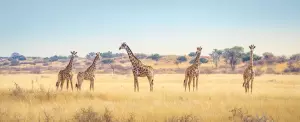
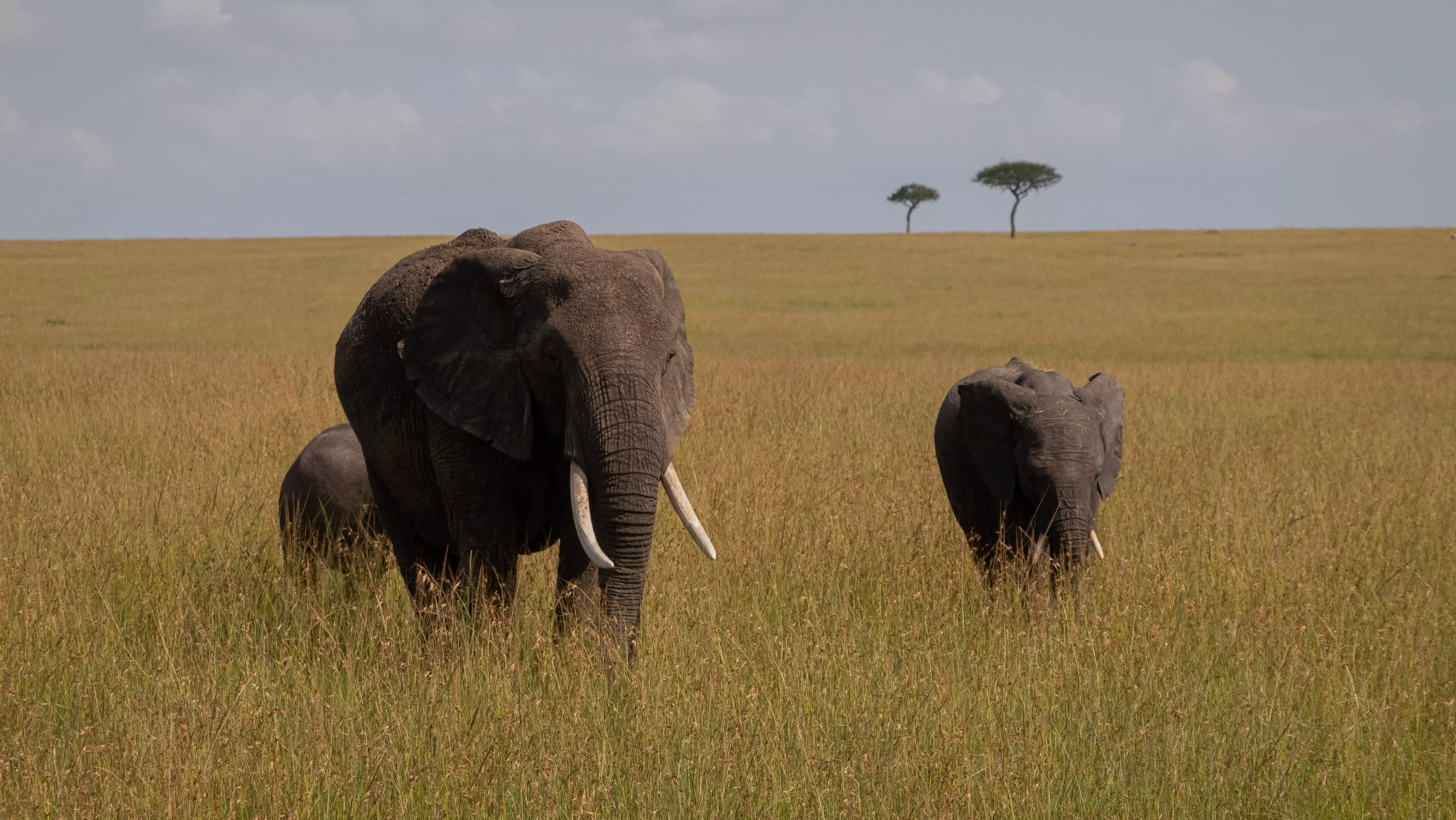
The landscape transforms into a lush greenery from the rainy months that have preceded the winter – and this also marks the time that herbivores experience a baby boom, so you have the chance to see hundreds of baby animals, such as giraffes, elephants and zebra.
While November and December are typically the wettest months, by the time January and February come around, the rain is less frequent, making for pleasant conditions for safari, and shorter grasses mean better opportunities to see big cats such as lions, leopards and cheetahs.
Temperatures are generally cooler, making it comfortable whether you’re planning a walking safari, safari by jeep, or even a hot air balloon safari.
Visitors also have the advantage of winter being the low season, so prices are lower – ideal if you’re visiting on a budget.
2. Ngorongoro Crater – Tanzania
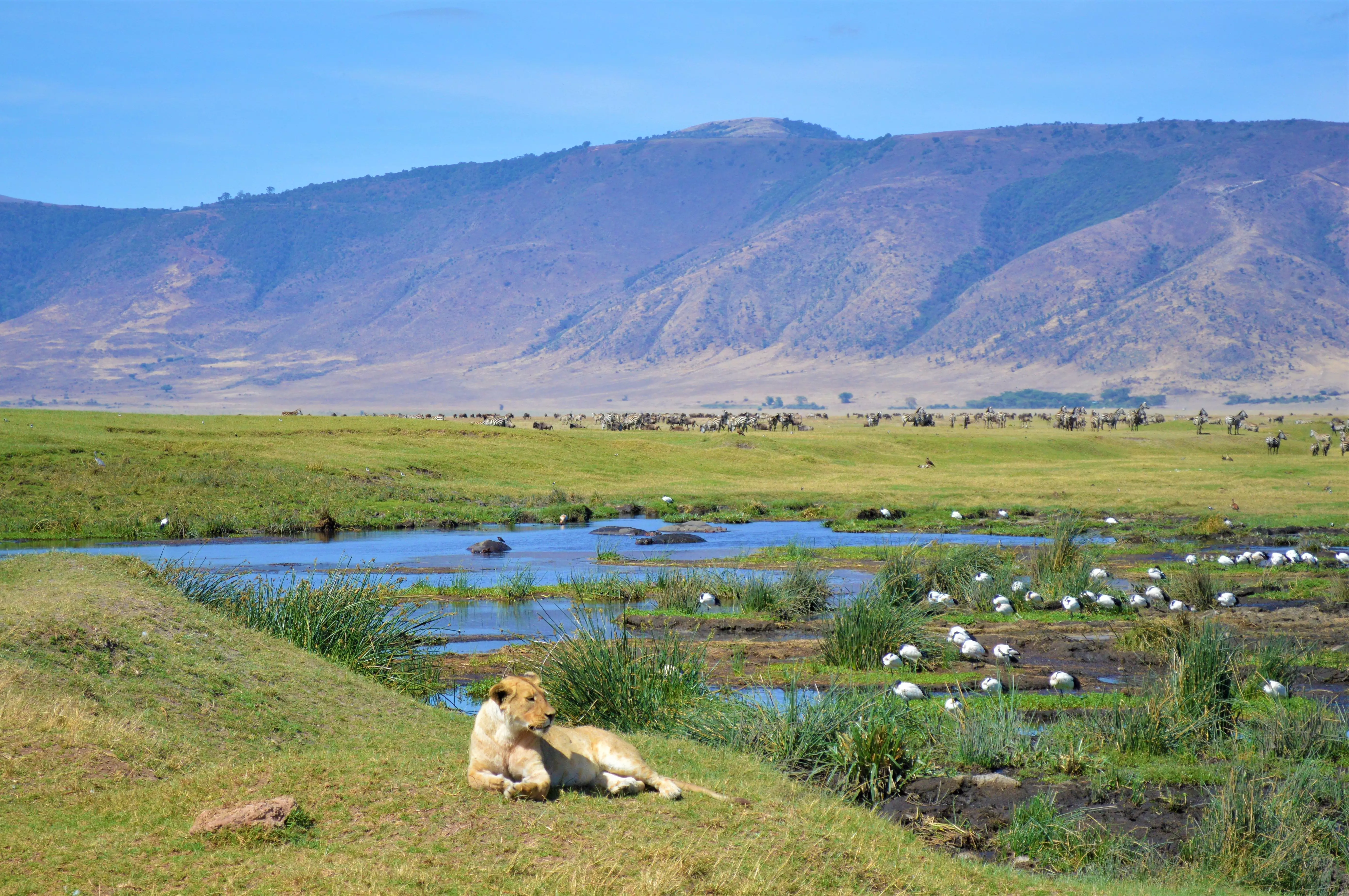
One of the richest areas for wildlife anywhere in the world, the Ngorongoro Crater in Tanzania is ideal for visiting during the winter months.
Similar to neighbouring Kenya, a mass calving season – primarily for wildebeest – occurs during January in the Ngorongoro Crater, which not only gives you the chance to see baby wildebeest, but also attracts huge numbers of predators, meaning you also have an excellent chance to see some of Africa’s big cats like lions and leopards.
The lush green grasses also make for beautiful backdrops to photos, as well as the migratory birds that light up the skies with their rich array of colours when they arrive during the winter months.
Temperatures hover around 23℃ during the day, making it pleasantly warm to visit and not overbearingly hot like in the dry season.
3. Kruger National Park – South Africa
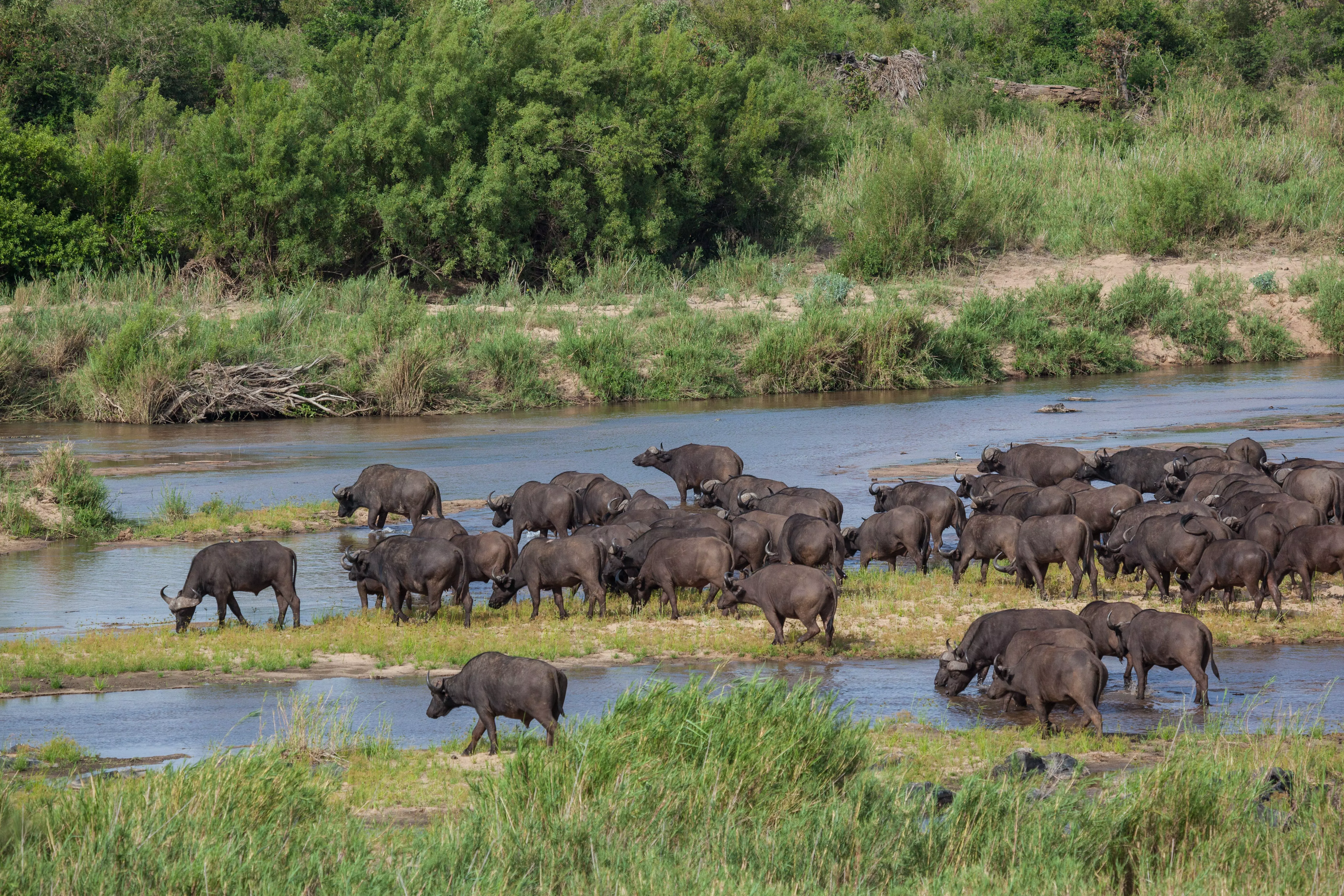
If you don’t mind the rain, the winter months can be some of the best to visit Kruger National Park in South Africa, especially if you’re into birdwatching.
Species such as the yellow-billed stork and the trumpeter hornbill gather in huge groups around watering holes, which are often full. If you base yourself around these watering holes, you can expect to see crocodiles and hippos co-existing in huge numbers.
The yellow-billed storks breed in the winter months, and the huge abundance of chicks also means excellent hunting and scavenging opportunities for some of the park’s most formidable carnivores, such as leopards, hyenas and African painted dogs.
Temperatures regularly reach 30℃, but if you can deal with the heat and humidity, then this is an excellent opportunity to see some of Africa’s most unique wildlife in the off-season.
4. Central Kalahari Game Reserve – Botswana
Because Botswana is also in the south of the continent, the climate conditions in the Central Kalahari Game Reserve are similar to those in Kruger National Park.
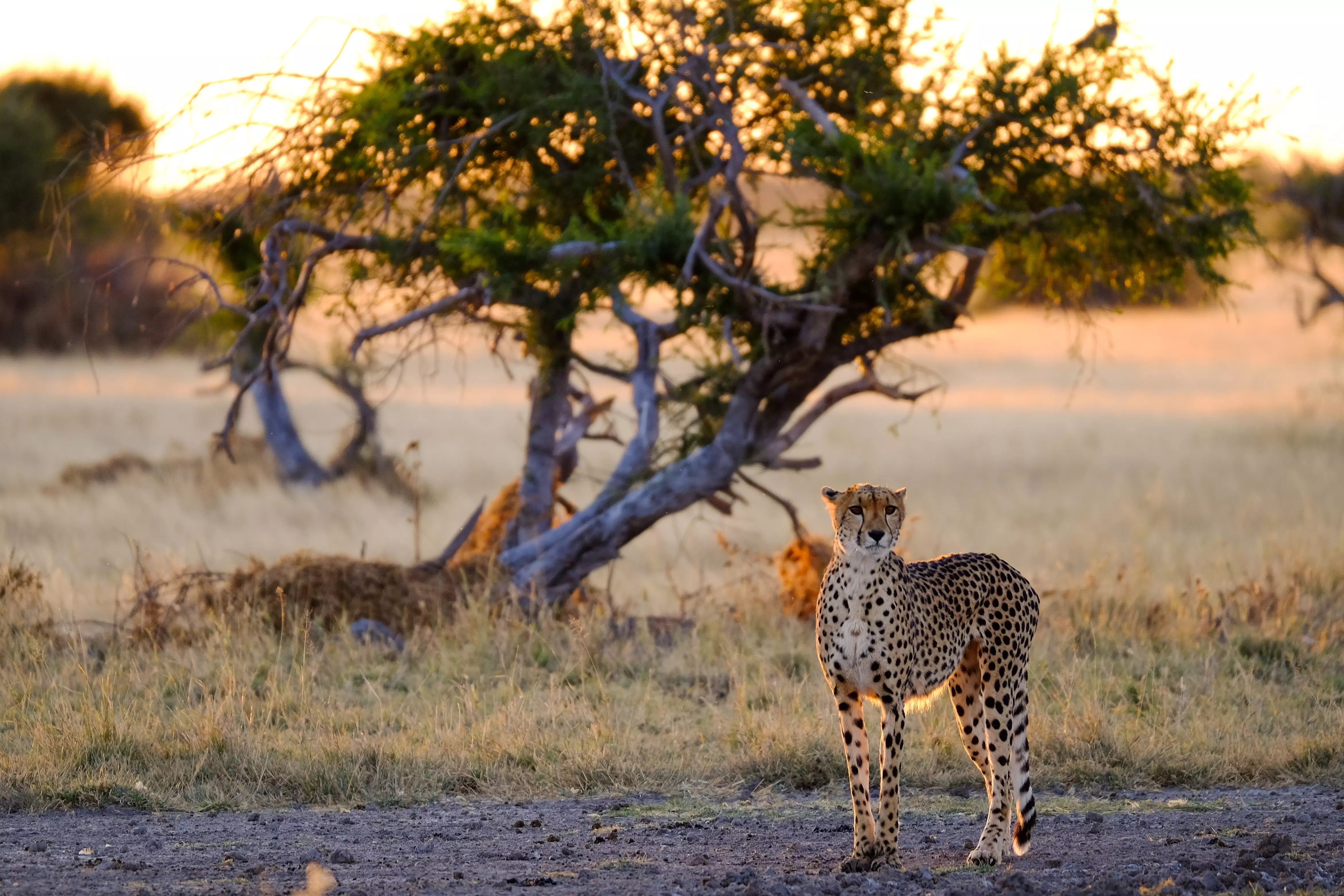
As such, there is a baby boom among the herbivores, and the dry and dusty park transforms into a rich, water-filled green paradise. And naturally, along come the herbivores, and not far behind them are the predators.
Herbivores such as wildebeest, zebra and other species of antelope and gazelle give birth in the national park during the winter months, giving you the unique opportunity to see baby animals – many of which belong to critically endangered species – frolicking in the green grasses of the Central Kalahari Game Reserve.
In addition, these huge numbers of herbivores mean that the predators follow them close behind, and it’s the best time of the year to witness predator-prey interactions.
It’s worth mentioning that these are often a lot more bloody and chaotic than those that are heavily edited on wildlife documentaries, so be prepared for this if you’re heading on a safari in the Central Kalahari Game Reserve this winter.
5. Etosha National Park – Namibia
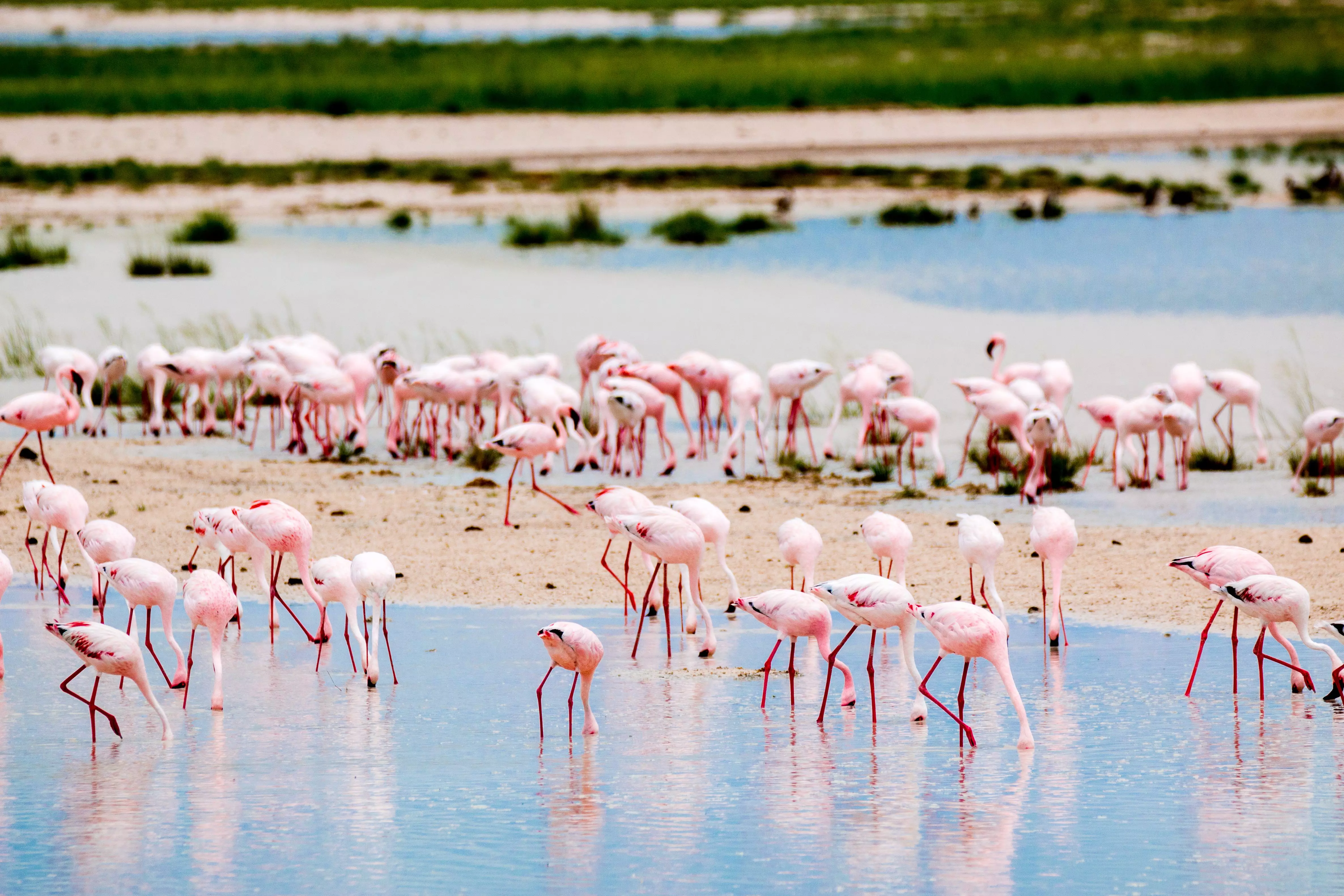
Unlike other African national parks, Etosha National Park in the winter months is not a great time to see big game such as elephants, lions and leopards – but it is a fantastic time for keen birdwatchers.
Africa is home to around 1,400 native bird species, and 25% of these can be found in Etosha National Park.
Flamingoes and pelicans flock to the park in their hundreds during the winter months to give birth and raise their young in a generally safe environment, which is mostly free of predators.
This is an excellent opportunity for avid twitchers to bring their binoculars and see some of the most unique and diverse bird species in the world in one concentrated area in Etosha National Park.
Furthermore, January and February are two of the quietest seasons to visit the National Park, meaning reduced prices for accommodation and safari tours.
6. Volcanoes National Park – Rwanda
Found in Central-East Africa, Rwanda is home to Volcanoes National Park, and the winter months are some of the best to see some of Africa’s rarest and most unique species.
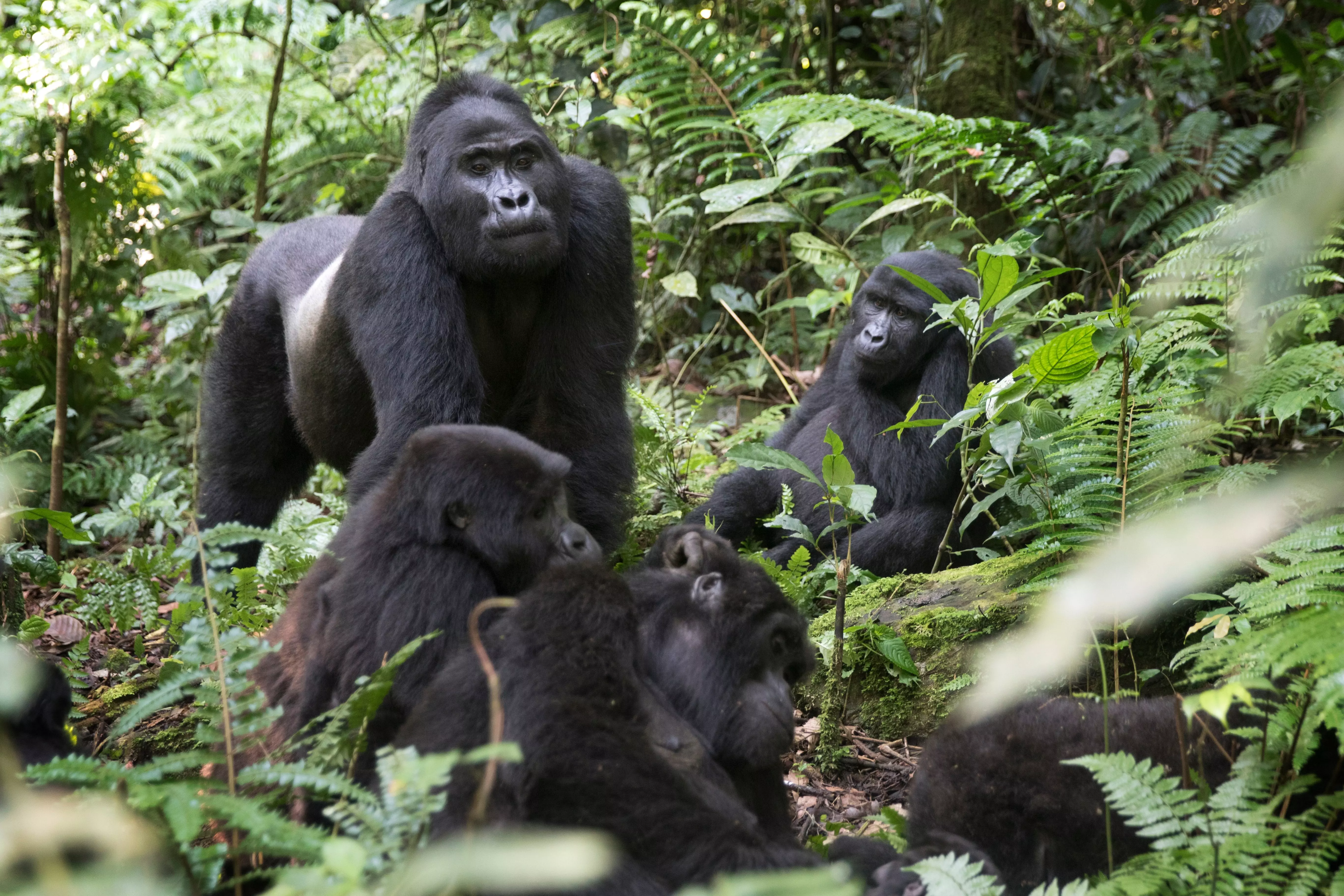
Rwanda is one of the only places in the world where mountain gorillas can be found, and the short dry season that occurs in January and February in Rwanda is the best time of year to see these incredible animals.
Unlike other safaris, which are often undertaken by jeep or even helicopter, gorilla trekking is the main attraction in Volcanoes National Park, meaning you get up close and personal with the mountain gorillas – sometimes within just a couple of metres of them.
While this is a nerve-wracking experience for most, it’s a truly once-in-a-lifetime experience to see them, and given that estimates suggest that there are only just over 1,000 of them left in the world, it’s either now or never that you get to see them.
Furthermore, other wildlife that can be observed in the National Park from the safety of a vehicle during the winter months include spotted hyenas, Cape buffalo, golden monkeys, and the rare and elusive forest elephants.
7. Serengeti – Tanzania
It will come as little surprise that the Serengeti makes this list, as it is one of the world’s most famous areas for safari any time of the year.
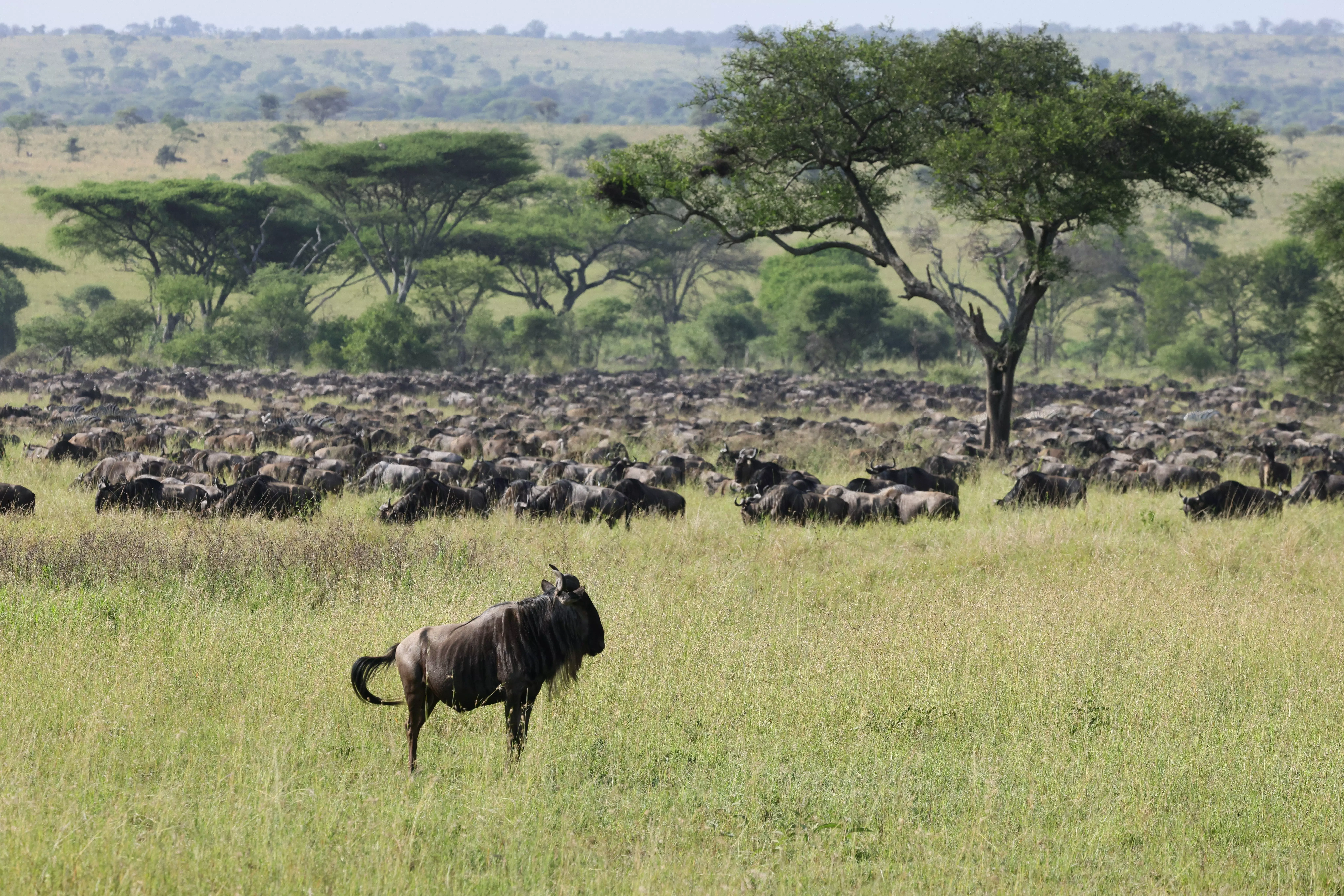
However, the calving season happens during the winter months as the thousands-strong herds of wildebeest and zebra move south across the Serengeti onto the plains to give birth to their young.
The grasses are short yet abundant, and this makes excellent viewing for predator-prey interactions.
Stampedes are not uncommon to see, and where there’s a stampede, there’s a predator – or predators. Lions, leopards, cheetahs, hyenas and painted dogs – some of the world’s most formidable predators – all gather for the Great Migration, and there’s an excellent chance to see them all in action during the winter months.
In addition, the Grumeti River, which flows through the Serengeti, has lower water levels during winter, meaning there is an almost guaranteed chance to see the resident hippos and crocodiles, as well as other animals that come to drink at the river, including rhinos, elephants and giraffes. In addition, Nile crocodiles, which live around the Grumeti, are some of the largest on the planet.
Overall, for wildlife enthusiasts, visiting the Serengeti in winter is one of the best places to go for seeing some of the world’s most recognised species.
Get ready to plan your trip to Africa
ABOUT THE AUTHOR
Chester Ollivier
Chester is passionate about exploring new places through food, history and heritage. Whether he is uncovering hidden gems in North East England or travelling to exotic locations across the globe, his enthusiasm for food and history fuels his adventures. His love for writing, combined with his intrigue of different cultures and their histories has led him to pursue a career as a travel writer.