
Travelling across Europe by car is one of the best ways to explore the continent, and many travellers choose cross-border car rental to visit multiple European countries in one trip. Home to over 40 countries – the majority of which are well-connected by excellent road networks and open borders – it’s common for travellers to start a road trip in one country and visit several others in the space of a few days or a week. And major rental companies such as Hertz, Sixt, and Europcar often allow cross-border travel within Western Europe.
Before booking car hire in Europe with the intention of crossing borders, it’s important to understand the rules and regulations surrounding it, all of which we’ll cover in this guide.
Can You Take a Rental Car Across Borders in Europe?
For the most part, you can take a rental car across borders in Europe, but this depends on several factors, including the individual supplier and the countries or territories involved.
Why do some rental companies allow cross-border travel
Certain companies are more relaxed with cross-border travel in Europe because of their geographical locations, meaning that cross-border travel is an essential part of their service offerings.
For example, the tiny country of Liechtenstein does not even have an airport, so many visitors opt to hire a car from Zürich Airport in neighbouring Switzerland, and drive 80km to Liechtenstein in a hire car.
Comparing multiple suppliers through Enjoy Travel helps to showcase which suppliers allow cross-border travel and which conditions might apply.
Why certain borders or countries are restricted
There are several reasons why cross-border car hire is forbidden in some areas of Europe. Sometimes this is due to insurance limitations, while at other times it is for political reasons, such as travelling from an EU country (such as Germany) to a non-EU country (such as Switzerland).
In addition, cross-border travel can be difficult in areas with high political tensions, such as Ukraine and Belarus. Cross-border travel in parts of the Balkans – including Serbia, Kosovo and Albania – may require additional documentation or insurance, and some suppliers restrict travel to these countries.
How policies differ between car hire suppliers
Individual car hire suppliers set their own policies for cross-border car hire in Europe, meaning that two suppliers from the same airport could have vastly different policies.
However, by choosing to compare multiple car rental providers through Enjoy Travel, you can review the policies of each supplier prior to booking in order to avoid disappointment.
Countries You Can Usually Drive Between
The majority of Western Europe and Central Europe is fine for cross-border driving. However, it’s always best to check with individual suppliers beforehand, and whether their policy covers you to drive between different countries.
Popular cross-border routes travellers take
Some popular cross-border travel routes include Spain to Portugal, France to Spain, Germany to Austria, Belgium to the Netherlands, and Switzerland to Italy.
Driving within the Schengen Area
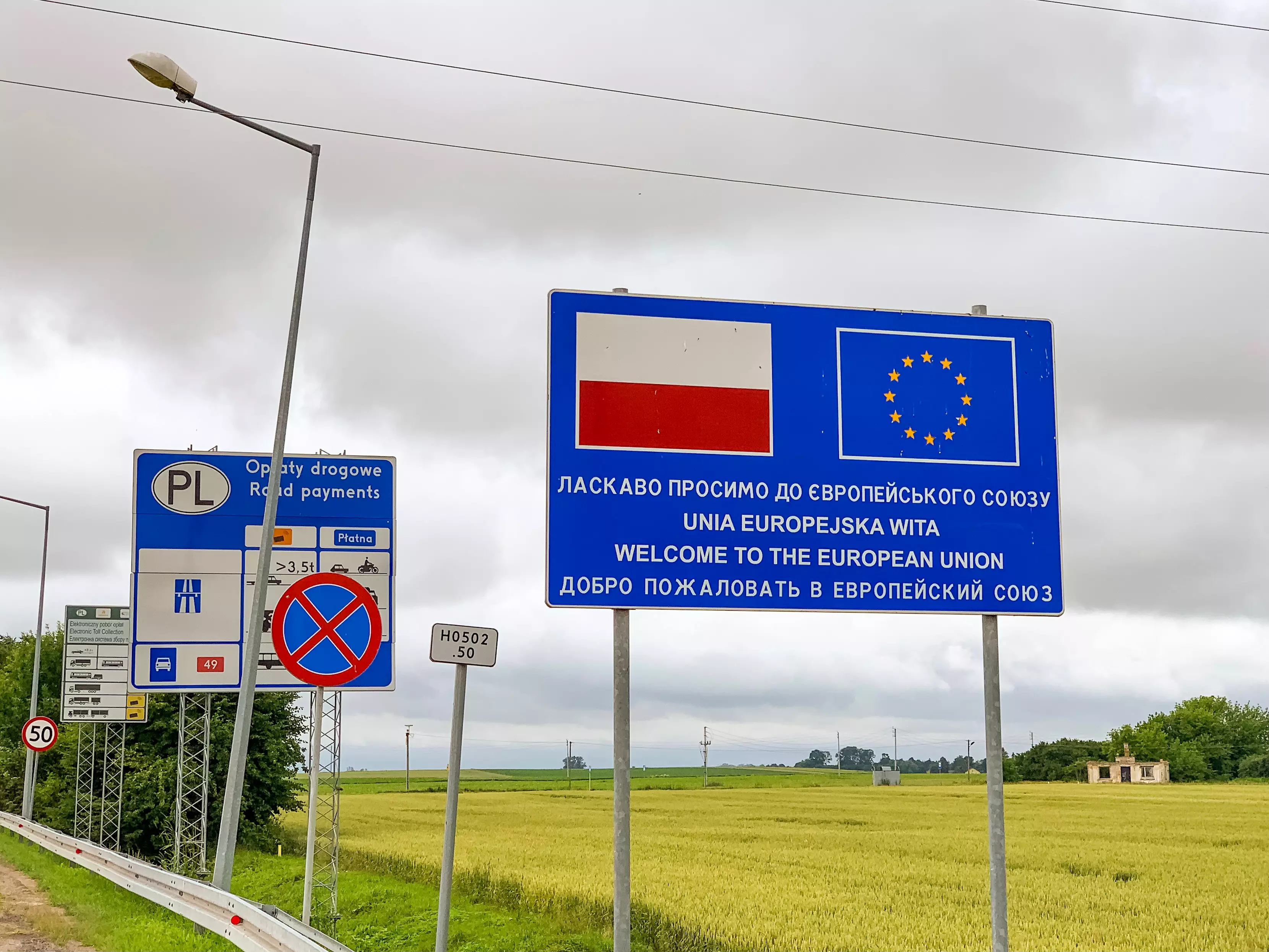
The majority of Europe is in the Schengen Area, also known as the Schengen Zone. This means that passport-free travel is allowed between participating countries.
Countries in the Schengen Area make cross-border travel much easier for travellers, but it does not automatically mean that car hire companies allow free travel between these countries – you should always check with individual companies beforehand.
Not all European countries are part of the Schengen Area. Several countries in Eastern and Southeastern Europe remain outside the zone, including Albania, Bosnia & Herzegovina, North Macedonia, Moldova, Montenegro, Serbia, Ukraine and Belarus. Some EU countries, such as Cyprus and Ireland, are also outside the Schengen travel area.
Western and Central Europe routes that are commonly allowed
The majority of suppliers allow free travel between many Western and Central European countries, including France, Germany, Spain, Portugal, Belgium, the Netherlands, Italy, Luxembourg, Austria and Switzerland.
These countries are also home to some of Europe’s most famous road trips.

Countries That May Require Extra Permission
While the majority of Western and Central Europe is compatible with cross-border travel, some countries in Eastern Europe and Southern Europe can have additional restrictions, and may require extra permissions to hire a car from rental companies.
Eastern European Restrictions
Some countries may require written permission or extra insurance documents before allowing cross-border travel. Most of these countries are located in Eastern and Southeastern Europe: Albania, Bosnia & Herzegovina, Bulgaria, Croatia, Romania and Serbia.
Additional fees for cross-border travel
Some car hire suppliers require additional fees if you are going to travel into a bordering country, which is often required as an upfront payment.
These fees vary in price and can be dependent on a number of factors, such as any political dangers in neighbouring countries or travel restrictions.
As such, you must declare in advance – when you are booking – if you are planning cross-border travel, otherwise your insurance may be invalid.
Insurance requirements when leaving the rental country
To make sure that you’re fully insured, car hire suppliers require advance notice if you’re planning cross-border travel.
Many insurance policies are structured around specific regions (such as neighbouring countries or other countries in the Schengen Area), so if you drive outside of the countries which are covered by this insurance, then it will be invalid.
How to Add Cross-Border Travel to Your Booking
You will need to plan ahead if you are thinking about cross-border travel in a hire car in Europe.
Selecting the correct option when booking
When searching for a hire car on Enjoy Travel, you will see details about what is included in the rental price, such as insurance and the fuel policy.
Ensure that you review the supplier’s terms and conditions carefully before booking if you are planning on cross-border car hire.
Why you should always declare border crossings
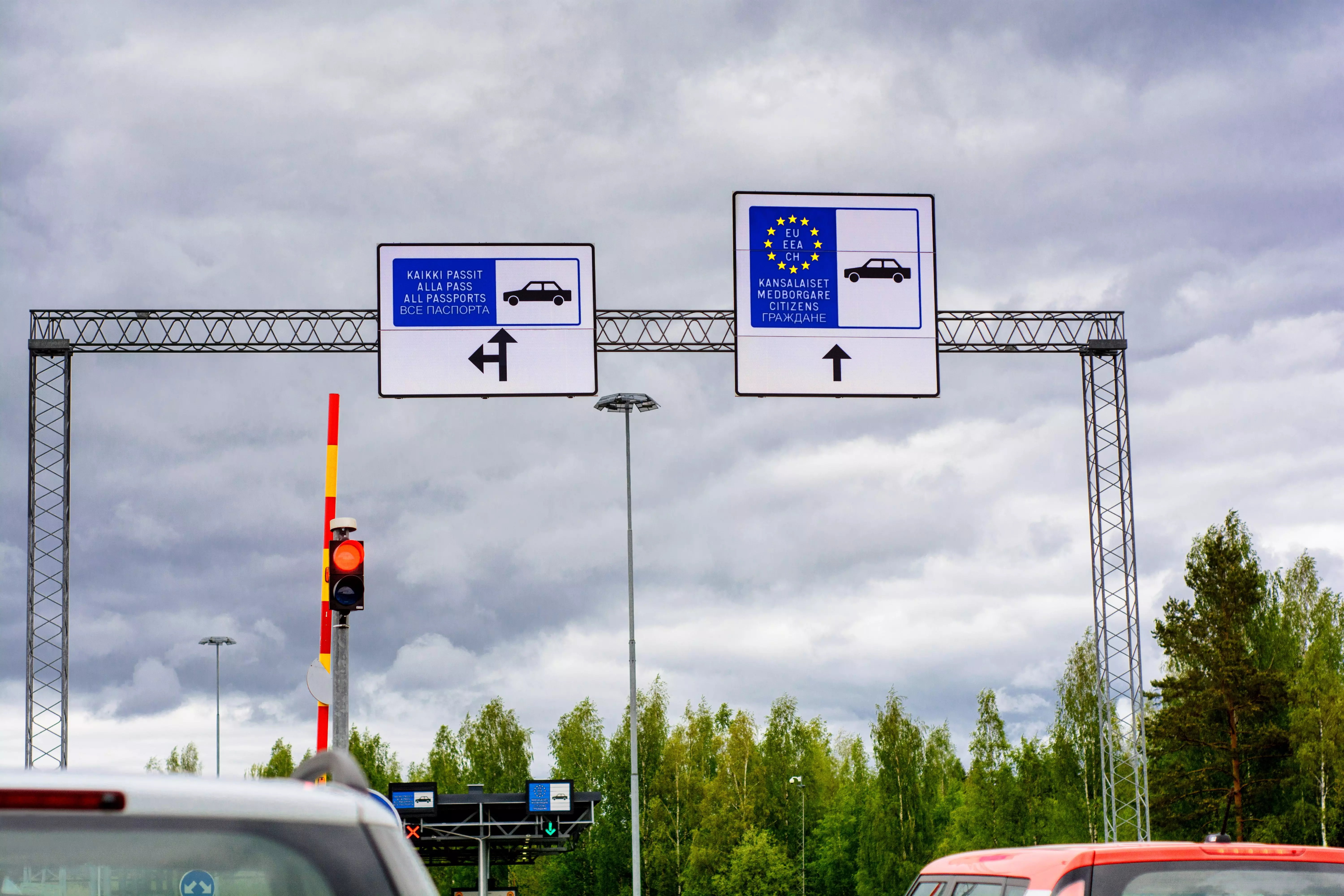
Even when travelling between countries with open borders (such as Spain and France), you should always declare border crossings.
This is because several issues can arise if you do not, such as your insurance being invalid, breaching the rental agreement and facing additional charges.
If you’re involved in a car accident in a foreign country and uninsured, you could face huge fines or even legal action.
Documents you may need when driving abroad
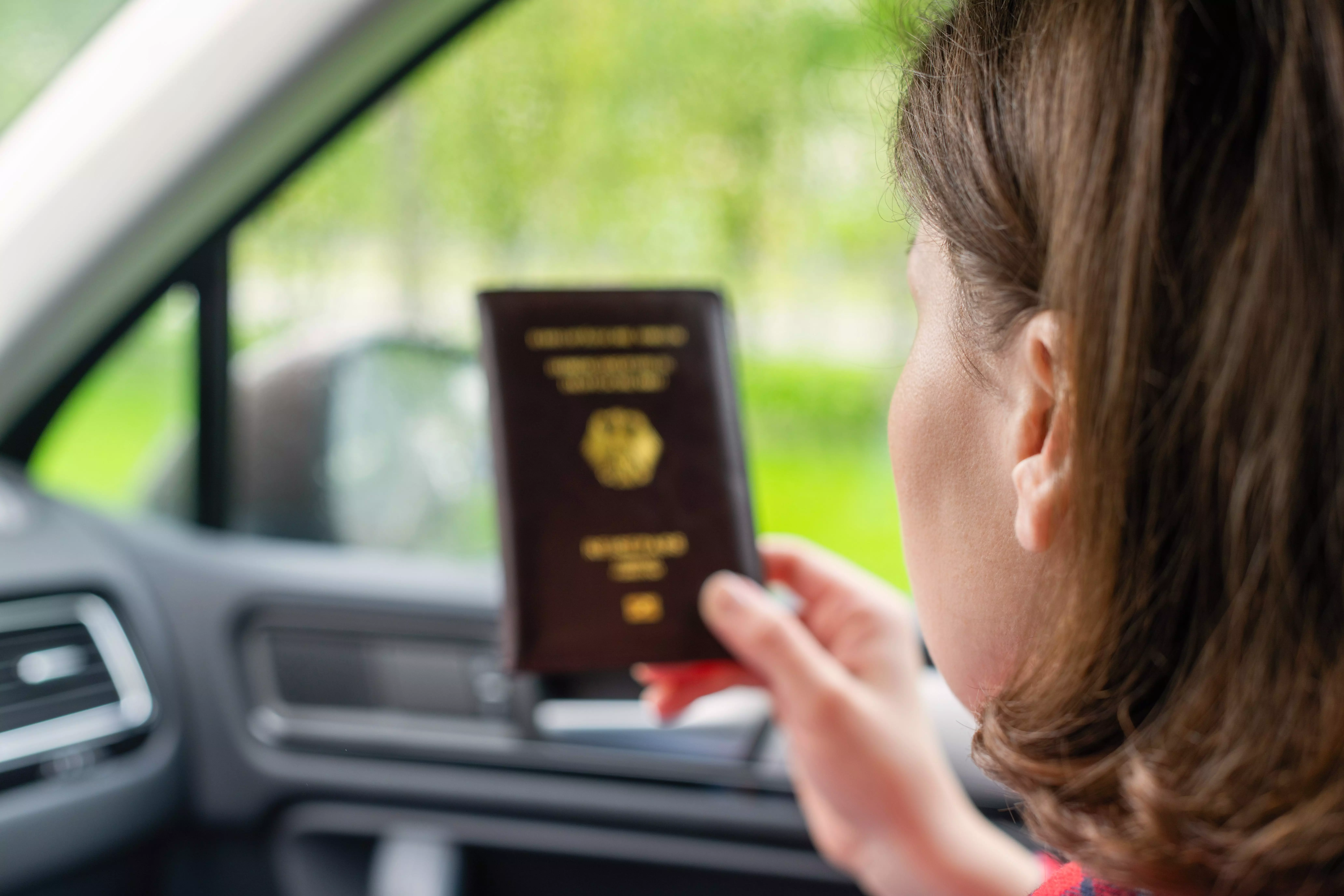
It is essential to carry your driving licence and your passport when travelling through Europe at all times.
However, when you hire a car for cross-border travel, you should also always travel with the booking confirmation (via email on your smartphone or a physical paper copy), and the same applies to the car hire agreement, the insurance documents and policy.
Tips for Driving Across Borders in Europe
Driving across Europe is generally straightforward, but there are several factors you should take into account before doing so.
Check local driving rules before you cross
Driving rules can vary across Europe, including everything from the minimum and maximum age to hire a car, to drink-driving limits, with some countries having a zero-tolerance approach, including the Czech Republic, Hungary, Romania and Slovakia.
Check local rules before crossing borders to ensure that you’re fully prepared for driving in a different country.
Understand tolls, vignettes, and road taxes
Tolls and vignettes – special road permits – are common throughout Europe.
Many tolls are for motorways (highways) in Western and Central Europe. Payment methods vary by country. Some toll roads use physical toll booths, while others operate electronic toll systems that charge automatically or require online payment within a certain period.
Some have physical stations where you pay before you enter the road, and while many accept contactless or card payments, some (mostly in Eastern Europe) are still cash-operated, so it is always a good idea to carry some local currency cash with you.
Make sure your insurance covers every country
This may seem obvious, but if you’re planning a road trip through France, Germany, Switzerland and Italy (for example), it is imperative that you check that your insurance covers all of your destinations, not just one or two of the countries listed.
Finding Rental Cars for Cross-Border Trips with Enjoy Travel
Planning a cross-border European road trip becomes much easier when you can find a multitude of car hire suppliers all in one place.
Comparing suppliers that allow cross-border travel
Because Enjoy Travel compares suppliers from all over the world, you will see a wide range of big names in the industry – such as Hertz, Green Motion and Sixt – as well as local suppliers.
Each of these suppliers shows the capacity of the car, its transmission, price and more. To check if a supplier allows cross-border travel with Enjoy Travel, input your pick-up location, uncheck the ‘return to same location’ box, and input your return location. In the search results, the suppliers listed will allow cross-border travel.
Checking policies before you book
You should always check the car hire policy of each supplier before you book.
In the ‘Important Information’ section under each supplier on the Enjoy Travel website, you can see features such as whether a deposit is required (and how much), payment methods, mileage limits, age restrictions and more – all of which provide crucial information before you book.
Choosing the right car for a multi-country trip
If you’re planning a long road trip across Europe and visiting two or more countries, it's likely that you’ll be travelling a long distance over the course of a few days.
As such, you will want a car which is fuel-efficient and has good MPG (miles per gallon).
It is also important to consider the storage space in the car, especially if you are bringing equipment such as hiking gear, camping gear and more, so you will want a car with ample luggage storage.
Finally, your comfort and the comfort of your passengers are also important to consider, so you will need a car which is both comfortable and practical.
Get ready to plan your trip to Europe
ABOUT THE AUTHOR
Chester Ollivier
Chester is passionate about exploring new places through food, history and heritage. Whether he is uncovering hidden gems in North East England or travelling to exotic locations across the globe, his enthusiasm for food and history fuels his adventures. His love for writing, combined with his intrigue of different cultures and their histories has led him to pursue a career as a travel writer.
SIMILAR ARTICLES

What is Zero Excess?
Booking Direct vs Broker: Which Really Saves You Money?
MOST POPULAR
newsletter